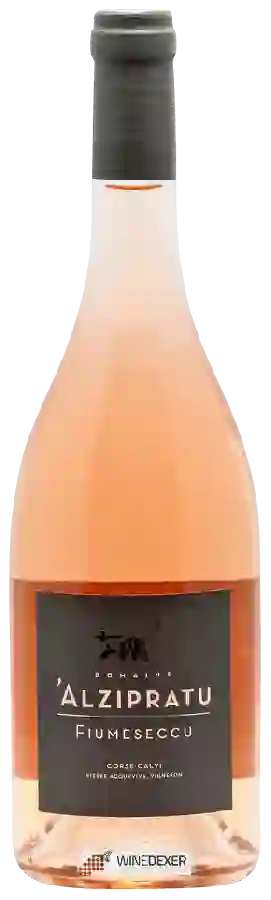
Domaine d'AlzipratuFiumeseccu Rosé
 Pink wine



This wine generally goes well with

Wine flavors and olphactive analysis


On the nose the Fiumeseccu Rosé of Domaine d'Alzipratu in the region of Corsica often reveals types of flavors of grapefruit, peach or cranberry and sometimes also flavors of tree fruit, spices or citrus fruit.
Details and technical informations about Domaine d'Alzipratu's Fiumeseccu Rosé.
Discover the grape variety: Piquepoul gris
Lively, citrusy whites and pale rosés with a salmon-pale hue, light palate and preserved acidity, showing aromas of citrus (lemon, grapefruit), white flowers and saline mineral notes. Tense, iodine-tinged southern profile. Rarer than Picpoul blanc, it contributes in small quantities to certain Languedoc blends and is attracting renewed interest. Grey-skinned mutation of Picpoul, grown in the Languedoc and southern Rhône.
Last vintages of this wine
The best vintages of Fiumeseccu Rosé from Domaine d'Alzipratu are 2015, 2017, 2018, 2016 and 2019.
Informations about the Domaine d'Alzipratu
The Domaine d'Alzipratu is one of of the world's greatest estates. It offers 14 wines for sale in the of Vin de Corse to come and discover on site or to buy online.

The wine region of Vin de Corse
Regional AOC covering the Île de Beauté outside the communal AOCs, Mediterranean climate on granite and schist. Signature native trio. Niellucciu as deep red (cousin of Sangiovese): black cherry, blackberry, garrigue, maquis, leather and spices, firm tannins. Sciaccarellu as fine peppery red (strawberry, pepper, herbs), also great rosé.
The wine region of Corsica
Mediterranean island wine region with a triple native face, ~8,000 ha. Niellucciu signature (cousin of Sangiovese) dominates Patrimonio: structured reds with signature notes of black cherry, garrigue, maquis, spices and leather, firm tannins and sun-drenched mouth. Sciaccarellu (min. 60% in Ajaccio) lighter and peppery (strawberry, wild herbs).
The word of the wine: Reserve wine (champagne)
Older wines, kept in vats or aged in wood in some houses, or kept in magnums at Bollinger. A small percentage of these wines are used in the blending of non-vintage wines in order to bring greater aromatic complexity.