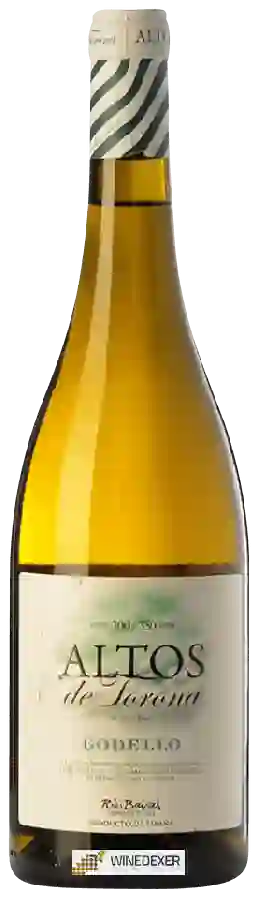
Winery Altos de ToronaGodello
 White wine



This wine generally goes well with

Wine flavors and olphactive analysis




On the nose the Godello of Winery Altos de Torona in the region of Galice often reveals types of flavors of earth, microbio or tree fruit and sometimes also flavors of citrus fruit, floral or tropical fruit.
Details and technical informations about Winery Altos de Torona's Godello.
Discover the grape variety: Doux d'Henry
Light, fruity reds with a clear ruby hue, soft tannins and an airy palate, featuring aromas of strawberry, raspberry, cherry and floral notes. Also vinified as a delicate off-dry. One of the last survivors of the historic Pinerolese DOC vineyard, west of Turin, yielding artisanal, character-driven cuvées. Native Piedmontese black variety, preserved for its heritage value.
Last vintages of this wine
The best vintages of Godello from Winery Altos de Torona are 2019, 2018, 2016, 0 and 2017.
Informations about the Winery Altos de Torona
The Winery Altos de Torona is one of of the world's greatest estates. It offers 14 wines for sale in the of Rías Baixas to come and discover on site or to buy online.

The wine region of Rías Baixas
World benchmark for Albariño (~96% of the vineyard), Atlantic Galicia. Lively, saline dry whites with signature notes of grapefruit, white peach, exotic fruit, white flowers and a characteristic iodine touch, a mineral palate kept taut by Atlantic humidity — the perfect match for seafood, polbo á feira and shellfish. Vines sometimes on pergolas (parras). Also Treixadura and Loureira.
The wine region of Galice
Oceanic northwest Spain, cradle of the great Iberian whites. Signature Albarino of Rias Baixas: lively, saline whites with signature notes of citrus, white peach, white flowers, fresh almond and iodine minerality, a taut palate — a perfect match for Atlantic seafood. Also premium Godello (pear, citrus, butter), aromatic Treixadura. Supple Mencia reds (raspberry, herbs, graphite).
The word of the wine: Consistency
In tasting, it is the equivalent of chewing (the chewiness of a tannic red wine is also mentioned). We then speak of firmness, fluidity, softness, hardness, and why not the crunchiness of an early wine by reference to the grape.


