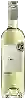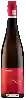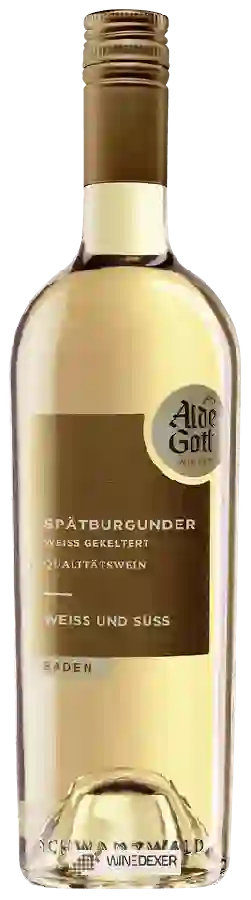
Winery Alde GottSpätburgunder Weiss Gekeltert
 White wine


This wine generally goes well with vegetarian
Food and wine pairings with Spätburgunder Weiss Gekeltert
Pairings that work perfectly with Spätburgunder Weiss Gekeltert

Original food and wine pairings with Spätburgunder Weiss Gekeltert
The Spätburgunder Weiss Gekeltert of Winery Alde Gott matches generally quite well with dishes of vegetarian such as recipes of zucchini quiche.
Details and technical informations about Winery Alde Gott's Spätburgunder Weiss Gekeltert.
Discover the grape variety: Kerner
Intraspecific crossing between frankenthal and riesling obtained in Germany in 1929 by August Karl Herold (1902/1973). In 1951 and by crossing it with the sylvaner, we obtained the juwel. It should be noted that there is a mutation of Kerner, discovered in 1974 and bearing the name of kernling, with grapes of pink-grey to red-grey colour at full maturity. Kerner can be found in Germany, Belgium, Slovenia, Austria, Switzerland, Italy, South Africa, Australia, the United States, Canada, Japan... practically unknown in France except in a few Moselle vineyards.
Last vintages of this wine

The best vintages of Spätburgunder Weiss Gekeltert from Winery Alde Gott are 2016, 0, 2019, 2017
Informations about the Winery Alde Gott
The Winery Alde Gott is one of of the world's greatest estates. It offers 80 wines for sale in the of Baden to come and discover on site or to buy online.

The wine region of Baden
Baden is the southernmost of Germany's 13 official wine regions. It is also the warmest. Its relatively sunny, DryClimate permits the production of good-quality Spätburgunder (Pinot Noir) and ripe, relatively Full-bodied">Full-bodied examples of Grauburgunder (Pinot Gris) and Weissburgunder (Pinot Blanc). These are often made in oaked styles.
The word of the wine: Reassembly
During the vinification process, a "cap" is formed at the top of the vats with the solid parts (skin, pulp, pips, etc.), which contain tannins and colouring elements. Pumping over consists of emptying the vat from the bottom and pouring the juice back to the top, in order to mix the cap and the juice and to favour the exchange and the extraction. This old technique allows a better exchange between the solid parts and the liquid.