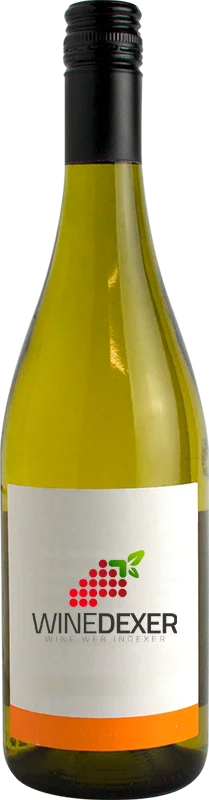
Ackermann Das WeingutRivaner
 White wine
In the mouth this white wine is a .
This wine generally goes well with vegetarian, appetizers and snacks or lean fish.
Taste structure of the Rivaner from the Ackermann Das Weingut
Light | Bold | |
Dry | Sweet | |
Soft | Acidic |
In the mouth the Rivaner of Ackermann Das Weingut in the region of Mosel is a .
Food and wine pairings with Rivaner
Pairings that work perfectly with Rivaner



Original food and wine pairings with Rivaner


The Rivaner of Ackermann Das Weingut matches generally quite well with dishes of shellfish, spicy food or vegetarian such as recipes of koskera hake (basque country), dal lentils with coconut milk or nanie's diced ham quiche.
Details and technical informations about Ackermann Das Weingut's Rivaner.
Discover the grape variety: Cornichon blanc
A very old variety that has been multiplied in many Mediterranean wine-producing countries, due to the fact that its grapes ripen quite late. It is only in Italy and Greece that it still occupies a significant area. In France, it is only found among amateur gardeners and/or collectors. By its foliage in particular, the white gherkin is different from the purple gherkin this last one is given as very little sensitive to the grey rot.
Informations about the Ackermann Das Weingut
The Ackermann Das Weingut is one of of the world's greatest estates. It offers 21 wines for sale in the of Mosel to come and discover on site or to buy online.

The wine region of Mosel
Mosel is the most famous of Germany's 13 official wine regions, and also the third largest in terms of production. As with many German regions, it is most aasociated with a range of wine styles made from the Riesling grape variety, but Müller-Thurgau is also widely planted. The best Mosel Riesling wines are some of the finest whites in the world. Light and low in Alcohol, they can be intensely fragrant with beguiling Floral">floral and Mineral notes, and a wonderful Balance of sweetness and Acidity.
The word of the wine: Presses
The juice that results from pressing the grapes after fermentation. At the end of the maceration, the vats are emptied, the first juice obtained is called the free-run wine and the marc remaining at the bottom of the vat is then pressed to give the press wine. We say more quickly "the presses". Their quality varies according to the vintage and the maceration. A too vigorous extraction releases the tannins of pips and the wine of press can then prove to be very astringent. Often the winemaker raises it separately, deciding later whether or not to incorporate it totally or partially into the grand vin.