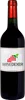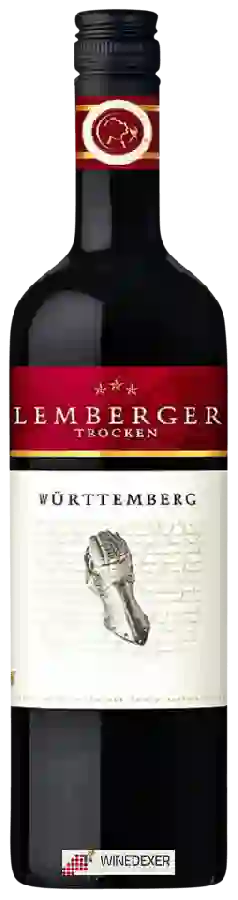
Winery Württembergische Weingärtner - Zentralgenossenschaft e. G.Eiserne Hand Lemberger Trocken
 Red wine


This wine generally goes well with
Wine flavors and olphactive analysis



On the nose the Eiserne Hand Lemberger Trocken of Winery Württembergische Weingärtner - Zentralgenossenschaft e. G. in the region of Württemberg often reveals types of flavors of non oak, microbio or black fruit.
Details and technical informations about Winery Württembergische Weingärtner - Zentralgenossenschaft e. G.'s Eiserne Hand Lemberger Trocken.
Discover the grape variety: Portugais bleu
The Portuguese blue-black is a grape variety originating from Austria. It produces a variety of grape specially used for wine making. It is rare to find this grape to eat on our tables. This variety of vine is characterized by medium-sized bunches and large grapes. You can find the Portuguese blue-black cultivated in these vineyards: Loire Valley, South-West, Provence & Corsica, Rhone Valley, Savoy & Bugey, Beaujolais.
Last vintages of this wine

The best vintages of Eiserne Hand Lemberger Trocken from Winery Württembergische Weingärtner - Zentralgenossenschaft e. G. are 0, 2016, 2015, 2014 and 2018.
Informations about the Winery Württembergische Weingärtner - Zentralgenossenschaft e. G.
The Winery Württembergische Weingärtner - Zentralgenossenschaft e. G. is one of of the world's great estates. It offers 86 wines for sale in the of Württemberg to come and discover on site or to buy online.

The wine region of Württemberg
Württemberg is known as Germany's premier red wine region. With almost 11,500 hectares (28,500 acres) of vineyards, it is the fourth-largest wine region in the country. Found adjacent to Baden and South of Franken, Wüttemberg is a particularly hilly and rural wine-region. Almost 70-percent of Württemberg wines are red, predominantly made from Trollinger, SchwarzRiesling and Lemberger.
The word of the wine: Second fermentation
In the making of champagne, fermentation of the base wine to which is added the liqueur de tirage and which takes place in the bottle. This second fermentation produces the carbon dioxide, and therefore the bubbles that make up the effervescence of the wine.