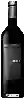
Winery WoowBonarda Red Natural Sweet
 Red wine


In the mouth this red wine is a powerful with a nice freshness.
This wine generally goes well with pork, poultry or veal.
Taste structure of the Bonarda Red Natural Sweet from the Winery Woow
Light | Bold | |
Smooth | Tannic | |
Dry | Sweet | |
Soft | Acidic |
In the mouth the Bonarda Red Natural Sweet of Winery Woow in the region of Mendoza is a powerful with a nice freshness.
Food and wine pairings with Bonarda Red Natural Sweet
Pairings that work perfectly with Bonarda Red Natural Sweet



Original food and wine pairings with Bonarda Red Natural Sweet

The Bonarda Red Natural Sweet of Winery Woow matches generally quite well with dishes of veal, pork or game (deer, venison) such as recipes of flank steak with shallots in red wine sauce, quiche without eggs or rabbit on the barbecue.
Details and technical informations about Winery Woow's Bonarda Red Natural Sweet.
Discover the grape variety: Tinta da Madeira
Portuguese, more precisely from the island of Madeira where it is still the most cultivated. It can be found in the United States (California), in Spain, etc. In France, it is practically unknown. Its parents are Grenache and Pinot Noir, an intraspecific cross obtained over two hundred years ago. It should be noted that this variety is the father of the egiodola.
Last vintages of this wine
The best vintages of Bonarda Red Natural Sweet from Winery Woow are 2018, 0, 2019
Informations about the Winery Woow
The Winery Woow is one of of the world's greatest estates. It offers 4 wines for sale in the of Mendoza to come and discover on site or to buy online.

The wine region of Mendoza
Mendoza is by far the largest wine region in Argentina. Located on a high-altitude plateau at the edge of the Andes Mountains, the province is responsible for roughly 70 percent of the country's annual wine production. The French Grape variety Malbec has its New World home in the vineyards of Mendoza, producing red wines of great concentration and intensity. The province Lies on the western edge of Argentina, across the Andes Mountains from Chile.
The word of the wine: Overmaturation
When the grapes reach maturity, the skin becomes permeable and progressively loses water, which causes a concentration phenomenon inside the berry. This is called over-ripening or passerillage.