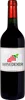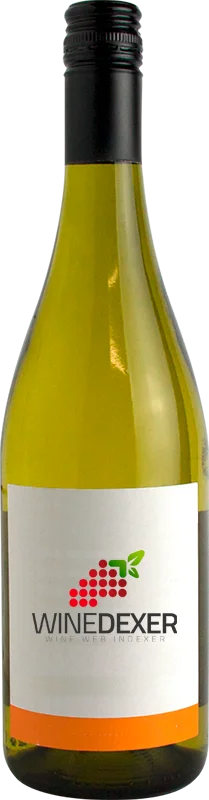
Winery WolffGrüner Veltliner - RivanerTrocken
 White wine
This wine generally goes well with pork, vegetarian or lean fish.
Food and wine pairings with Grüner Veltliner - RivanerTrocken
Pairings that work perfectly with Grüner Veltliner - RivanerTrocken



Original food and wine pairings with Grüner Veltliner - RivanerTrocken



The Grüner Veltliner - RivanerTrocken of Winery Wolff matches generally quite well with dishes of pork, rich fish (salmon, tuna etc) or shellfish such as recipes of spanish paella, braids of sole and salmon with morels or seafood and mushroom quiche.
Details and technical informations about Winery Wolff's Grüner Veltliner - RivanerTrocken.
Discover the grape variety: Christmas rose
Obtained in 1980 in the United States (California) by Harold P. Olmo and Albert T. Koyama by crossing S44-35c with 9117D. - Synonymy: no synonyms known to date (all the synonyms of the grape varieties, click here!).
Informations about the Winery Wolff
The Winery Wolff is one of of the world's greatest estates. It offers 11 wines for sale in the of Wien to come and discover on site or to buy online.

The wine region of Wien
Weinviertel DAC – whose name translates as "wine quarter" – is an appellation in Niederösterreich (Lower Austria). It is by far the largest Districtus Austriae Controllatus wine region in Austria. It was also the first Austrian wine region to be given that title, in 2002, with a DAC Reserve designation added in 2009. The designation applies only to white wines from the Grüner Veltliner Grape variety.
The wine region of Weinland
Weinviertel DAC – whose name translates as "wine quarter" – is an appellation in Niederösterreich (Lower Austria). It is by far the largest Districtus Austriae Controllatus wine region in Austria. It was also the first Austrian wine region to be given that title, in 2002, with a DAC Reserve designation added in 2009. The designation applies only to white wines from the Grüner Veltliner Grape variety.
The word of the wine: Maceration
Prolonged contact and exchange between the juice and the grape solids, especially the skin. Not to be confused with the time of fermentation, which follows maceration. The juice becomes loaded with colouring matter and tannins, and acquires aromas. For a rosé, the maceration is short so that the colour does not "rise" too much. For white wines too, a "pellicular maceration" can be practised, which allows the wine to acquire more fat.