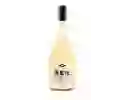
Winery Winerie ParisienneXP75 No.03 Gamay - Grenache
 Red wine
This wine generally goes well with beef and mature and hard cheese.
Food and wine pairings with XP75 No.03 Gamay - Grenache
Pairings that work perfectly with XP75 No.03 Gamay - Grenache


Original food and wine pairings with XP75 No.03 Gamay - Grenache
The XP75 No.03 Gamay - Grenache of Winery Winerie Parisienne matches generally quite well with dishes of beef or mature and hard cheese such as recipes of delicious bourguignon or pork in a salty-sweet way.
Details and technical informations about Winery Winerie Parisienne's XP75 No.03 Gamay - Grenache.
Discover the grape variety: Gamay noir
Gamay is a Burgundian grape variety that has existed since the 14th century. For fear of competition with the pinot noir of Burgundy, gamay was finally uprooted and planted in the Beaujolais region, from Mâcon to Lyon. These siliceous and granitic soils suit it perfectly, and it gives its best here. But it is also planted all over France, such as in Lorraine, in the Loire Valley, in Bugey, in Savoie and in Auvergne. Gamay is early and very productive and needs to be limited so that quality prevails over quantity. Short winter pruning of the shoots and high density of vines per hectare are the methods that allow it to produce very fruity, fresh and greedy red wines. Gamay is also very popular in red wine futures, and produces wines from the Beaujolais region with very interesting character and ageing potential. The AOCs Crémant-de-Bourgogne, Mâcon, Anjou, Touraine, Rosé de vallée de la Loire, Côtes-d'Auvergne, Saint-Pourçain, Bugey, Gaillac, Côtes du Luberon... and many vins de pays are proud of it. Today, about 36,000 hectares of Gamay are cultivated in France, including 22,000 hectares in Beaujolais.
Informations about the Winery Winerie Parisienne
The Winery Winerie Parisienne is one of of the world's great estates. It offers 18 wines for sale in the of Vin de Pays to come and discover on site or to buy online.

The wine region of Vin de Pays
Vin de Pays (VDP), the French national equivalent of PGI (Protected Geographical Indication) at the European level, is a quality category of French wines, positioned between Vin de Table (VDT) and Appellation d'Origine Contrôlée (AOC). This layer of the French appellation system was initially introduced in September 1968 by the INAO, the official appellation authority. It underwent several early revisions in the 1970s, followed by substantial changes in September 2000 and again in 2009, when all existing VDT titles were automatically registered with the European Union as PGI. Producers retain the choice of using either the VDP or PGI titles on their labels, or both - in the form "IGP-Vin de Pays".
The wine region of Pays d'Oc
Pays d'Oc is the PGI for red, white and rosé wines that are produced over a wide area of the southern coast of France. The PGI catchment area corresponds roughly to the Languedoc-roussillon">Languedoc-Roussillon wine region, one of the largest wine regions in France. The area covers all wines that are not produced under the strict laws that govern AOC-level appellations in the regions: among them, Corbières, Minervois and the Languedoc appellation itself. The Pays d'Oc PGI is arguably the most important in France, producing the majority of the country's PGI wines.
The word of the wine: Slight
Supple and easy to drink wine.