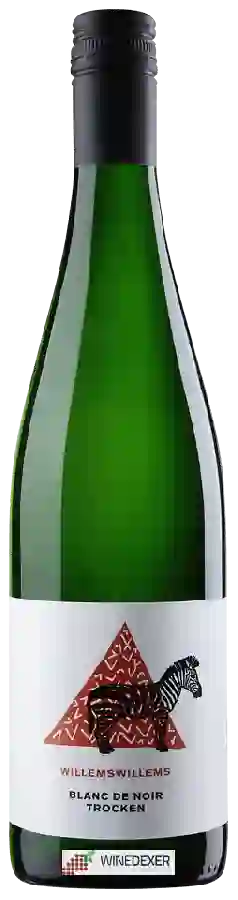
Winery WillemswillemsBlanc de Noir Trocken
 White wine



This wine generally goes well with vegetarian

Wine flavors and olphactive analysis

On the nose the Blanc de Noir Trocken of Winery Willemswillems in the region of Mosel often reveals types of flavors of citrus fruit, red fruit.
Food and wine pairings with Blanc de Noir Trocken
Pairings that work perfectly with Blanc de Noir Trocken

Original food and wine pairings with Blanc de Noir Trocken
The Blanc de Noir Trocken of Winery Willemswillems matches generally quite well with dishes of vegetarian such as recipes of quiche without pastry.
Details and technical informations about Winery Willemswillems's Blanc de Noir Trocken.
Discover the grape variety: Red Globe
Table grape with long clusters and spherical red-purple berries, thin skin and crisp flesh, sweet fresh taste. Highly productive with excellent shelf life. One of the most exported table grapes worldwide, grown in California, China, Peru, Chile and Spain, massively distributed globally. Black American table grape variety obtained in 1958 in California by complex crossing for fresh consumption.
Last vintages of this wine
The best vintages of Blanc de Noir Trocken from Winery Willemswillems are 2016, 2019, 0, 2017
Informations about the Winery Willemswillems
The Winery Willemswillems is one of of the world's greatest estates. It offers 32 wines for sale in the of Mosel to come and discover on site or to buy online.

The wine region of Mosel
Kingdom of lively, crystalline Riesling: citrus, green apple, gunflint, tangy tension and signature slate minerality. From light, fruity Kabinett to off-dry Spätlese, up to sweet Auslese and Trockenbeerenauslese of rare finesse. Some supple Müller-Thurgau and lively Elbling. Steeply sloped vineyards (up to 65% at the Bremmer Calmont) on blue and grey slate, 5,400 ha of Riesling (61.
The word of the wine: Hygrometry
Humidity level of the cellar necessary for a good ageing of the wines. The recommended hygrometry is around 70% in order to guarantee a good elasticity of the corks while preserving the labels.


