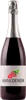
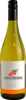
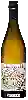
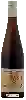
Winery Weinhaus Schneider-PfaffmannMerlot Rosé Trocken
 wine
wine
This wine generally goes well with
The Merlot Rosé Trocken of the Winery Weinhaus Schneider-Pfaffmann is in the top 0 of wines of Pfalz.
Details and technical informations about Winery Weinhaus Schneider-Pfaffmann's Merlot Rosé Trocken.
Discover the grape variety: Muscat de Roussé
Intraspecific cross between Hamburg Muscat and Cardinal, obtained in 1973 at the Roussé viticultural station (Bulgaria).
Informations about the Winery Weinhaus Schneider-Pfaffmann
The Winery Weinhaus Schneider-Pfaffmann is one of of the world's greatest estates. It offers 10 wines for sale in the of Pfalz to come and discover on site or to buy online.

The wine region of Pfalz
Pfalz is a key wine producing region in western Germany, located between the Rhein/Rhine river and the low-lying Haardt mountain range (a natural continuation of the Alsatian Vosges). It covers a rectangle of land 45 miles (75km) Long and 15 miles (25km) wide. To the NorthLiesRheinhessen; to the South, the French border and Alsace. In terms of both quality and quantity, Pfalz is one of Germany's most important regions, and one which shows great promise for the future.
The word of the wine: Local wine
Table wine, but with the origin indicated. It corresponds to a particular legislation: the freedom to use grape varieties is greater than for the AOC, but the quality criteria such as the approval tastings can sometimes be more demanding. The legislation is still evolving, but for the moment there are three levels: regional (e.g. Vin de Pays d'Oc), departmental and local (e.g. Côtes de Thongue).