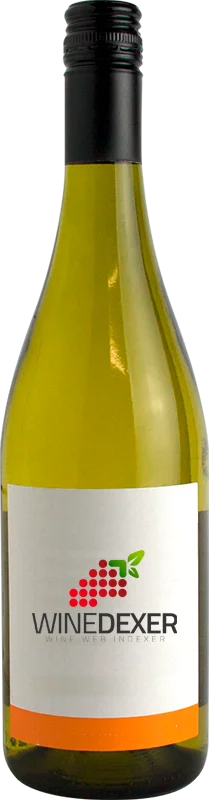
Weingut Rudolf FauthSilvaner Classic
 White wine
In the mouth this white wine is a with a nice freshness.
This wine generally goes well with pork, vegetarian or poultry.

Taste structure of the Silvaner Classic from the Weingut Rudolf Fauth
Light | Bold | |
Dry | Sweet | |
Soft | Acidic |
In the mouth the Silvaner Classic of Weingut Rudolf Fauth in the region of Rheinhessen is a with a nice freshness.
Food and wine pairings with Silvaner Classic
Pairings that work perfectly with Silvaner Classic



Original food and wine pairings with Silvaner Classic


The Silvaner Classic of Weingut Rudolf Fauth matches generally quite well with dishes of veal, pork or vegetarian such as recipes of veal grenadin with balsamic vinegar and honey, braised (green) cabbage or zucchini quiche.
Details and technical informations about Weingut Rudolf Fauth's Silvaner Classic.
Discover the grape variety: Muscat Bailey A
Supple, fruity reds with a moderate ruby robe, silky tannins and a direct palate, with signature Muscat aromas (fresh grape, rose), red fruits (cherry, strawberry), candy and hybrid herbal notes. A simple, early-ripening profile. Widely grown in Japan (Yamanashi, Nagano), it is the emblem of modern Japanese reds. Black hybrid grape created in 1927 by Zenbei Kawakami, a Bailey × Muscat Hamburg cross.
Informations about the Weingut Rudolf Fauth
The Weingut Rudolf Fauth is one of of the world's greatest estates. It offers 48 wines for sale in the of Rheinhessen to come and discover on site or to buy online.

The wine region of Rheinhessen
71% white region: Riesling is king (5,000 ha), dry to off-dry, ripe yellow fruit, apple, citrus and fine saline minerality. Supple, floral Müller-Thurgau for everyday, the world's largest Silvaner plantation with herbaceous, straight notes. Historic cradle of off-sweet Liebfraumilch. Some supple reds (Dornfelder, Spätburgunder).
The word of the wine: Presses
The juice that results from pressing the grapes after fermentation. At the end of the maceration, the vats are emptied, the first juice obtained is called the free-run wine and the marc remaining at the bottom of the vat is then pressed to give the press wine. We say more quickly "the presses". Their quality varies according to the vintage and the maceration. A too vigorous extraction releases the tannins of pips and the wine of press can then prove to be very astringent. Often the winemaker raises it separately, deciding later whether or not to incorporate it totally or partially into the grand vin.






