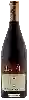
Weingut Philipp DhomKreuznacher Vogelsang Spätburgunder
 Red wine
In the mouth this red wine is a with a nice freshness.
This wine generally goes well with poultry, beef or veal.
Taste structure of the Kreuznacher Vogelsang Spätburgunder from the Weingut Philipp Dhom
Light | Bold | |
Smooth | Tannic | |
Dry | Sweet | |
Soft | Acidic |
In the mouth the Kreuznacher Vogelsang Spätburgunder of Weingut Philipp Dhom in the region of Nahe is a with a nice freshness.
Food and wine pairings with Kreuznacher Vogelsang Spätburgunder
Pairings that work perfectly with Kreuznacher Vogelsang Spätburgunder



Original food and wine pairings with Kreuznacher Vogelsang Spätburgunder

The Kreuznacher Vogelsang Spätburgunder of Weingut Philipp Dhom matches generally quite well with dishes of beef, veal or game (deer, venison) such as recipes of beef stew with white wine, venison bourguignon or giant paella cooked on a wood fire.
Details and technical informations about Weingut Philipp Dhom's Kreuznacher Vogelsang Spätburgunder.
Discover the grape variety: Ohanès
This variety is known in Spain, Portugal, Italy, Greece, Morocco, South Africa, the United States (California), Argentina, Chile, etc. In France, it is little cultivated because of its late maturity. - Synonyms: oanez or ohanez, uva de Almeria, uva del barco, santa paula, not to be confused with the white gherkin, khaen, grumer negro, valenci or valensi, which is not related to the black valensi (for all the synonyms of the grape varieties, click here!)
Informations about the Weingut Philipp Dhom
The Weingut Philipp Dhom is one of of the world's greatest estates. It offers 8 wines for sale in the of Nahe to come and discover on site or to buy online.

The wine region of Nahe
Nahe is one of the smaller German wine regions, named after the Nahe river which joins the Rhein at Rheinhessen/bingen">Bingen. The viticultural carea here is characterised by dramatic topography with steep slopes and craggy outcrops of metamorphic rock. Like most of the regions on or near the Rhine, its most prestigious wines are made from Riesling. There are around 4,000 hectares (10,000 acres) of Vineyards, spread across seven Grosslagen (wine districts) and over 300 Einzellagen (individual vineyard sites).
The word of the wine: Licking
Operation consisting in sanitizing a barrel by introducing a wick of ignited sulphur which produces a release of sulphurous gas.