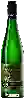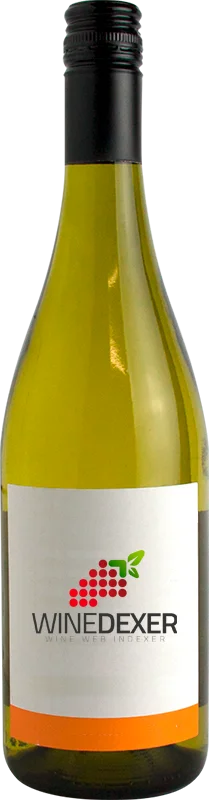
Weingut MathisGrauer Burgunder Rheinsand
 White wine
In the mouth this white wine is a .
This wine generally goes well with pork, cured meat or mushrooms.
Taste structure of the Grauer Burgunder Rheinsand from the Weingut Mathis
Light | Bold | |
Dry | Sweet | |
Soft | Acidic |
In the mouth the Grauer Burgunder Rheinsand of Weingut Mathis in the region of Rheinhessen is a .
Food and wine pairings with Grauer Burgunder Rheinsand
Pairings that work perfectly with Grauer Burgunder Rheinsand


Original food and wine pairings with Grauer Burgunder Rheinsand

The Grauer Burgunder Rheinsand of Weingut Mathis matches generally quite well with dishes of pork, spicy food or mushrooms such as recipes of andouillette with mustard sauce, mutton stew with potatoes and garlic or chicken chop suey.
Details and technical informations about Weingut Mathis's Grauer Burgunder Rheinsand.
Discover the grape variety: Lercat
Most certainly Pyrenean of Jurançonnais more precisely. It has long been confused with the lauzet, although its leaves are somewhat different. It is practically no longer present in the vineyards, which means that it is clearly on the way out. Published genetic analyses have revealed that it is related to one or more grape varieties, including Courbu Blanc. For more information, click here! - Synonymy: Arcat in Lasseube (Pyrénées atlantiques) (the synonymy of the grape varieties, click here!).
Informations about the Weingut Mathis
The Weingut Mathis is one of of the world's great estates. It offers 35 wines for sale in the of Rheinhessen to come and discover on site or to buy online.

The wine region of Rheinhessen
Rheinhessen is Germany's largest region for producing the quality wines of the Qualitätswein bestimmter Anbaugebiete (QbA) and Prädikatswein designations, with roughly 26,500 hectares (65,000 acres) of Vineyard">Vineyards as of 2014. Many of its most significant viticultural areas are favorably influenced by the Rhine river, which runs aLong its North and eastern borders. The Rhine, along with the Nahe river to the west and the Haardt mountains to its South, form a natural border. Rheinhessen covers an area south of Rheingau, north of Pfalz and east of Nahe, and is located within the Rhineland-Palatinate federal state.
The word of the wine: Body (having)
Wine, dense and rich in alcohol.