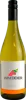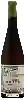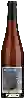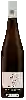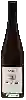
Weingut MagdalenenhofGrauburgunder Feinherb
 White wine
In the mouth this white wine is a .
This wine generally goes well with pork, cured meat or mushrooms.
The Grauburgunder Feinherb of the Weingut Magdalenenhof is in the top 30 of wines of Rüdesheim.
Taste structure of the Grauburgunder Feinherb from the Weingut Magdalenenhof
Light | Bold | |
Dry | Sweet | |
Soft | Acidic |
In the mouth the Grauburgunder Feinherb of Weingut Magdalenenhof in the region of Rheingau is a .
Food and wine pairings with Grauburgunder Feinherb
Pairings that work perfectly with Grauburgunder Feinherb


Original food and wine pairings with Grauburgunder Feinherb

The Grauburgunder Feinherb of Weingut Magdalenenhof matches generally quite well with dishes of pork, spicy food or mushrooms such as recipes of roast pork with mustard and honey, chicken massala or chicken with white wine and olives.
Details and technical informations about Weingut Magdalenenhof's Grauburgunder Feinherb.
Discover the grape variety: Carcajolo
The black Carcajolo is a grape variety originating from Italy. It produces a variety of grape specially used for wine making. It is rare to find this grape to eat on our tables. This variety of grape is characterized by medium-sized bunches and large grapes. The Carcajolo noir can be found cultivated in these vineyards: South West, Cognac, Bordeaux, Provence & Corsica, Rhone Valley.
Informations about the Weingut Magdalenenhof
The Weingut Magdalenenhof is one of of the world's greatest estates. It offers 18 wines for sale in the of Rüdesheim to come and discover on site or to buy online.

The wine region of Rüdesheim
Rüdesheim is a town on the northern banks of the Rhine river in the German wine region of Rheingau. It has a number of notable Vineyard sites planted mainly to Riesling. Seven of these are classified by the VDP as Grosse Lage: Rosengarten, Kirchenpfad, Unterer Bischofsberg, Berg Rottland, Berg Roseneck, Berg Kaisersteinfels and Berg Schlossberg. Someof these are on the south-facing slopes above the town.
The wine region of Rheingau
Rheingau is one of the most important of Germany's 13 Anbaugebiete wine regions. However it is far from the biggest; with 3,076 hectares (7,600 acres) of Vineyard">Vineyards documented in 2012, its output is around one tenth of that from the Pfalz and Rheinhessen regions. Located on the Rhine a 20-minute drive west of Frankfurt, the -gau suffix denotes that it was once a county of the Frankish Empire. The classic Rheingau wine is a DryRiesling with pronounced Acidity and aromas of citrus fruits and smoke-tinged minerality – typically more "masculine" than its equivalent from the Mosel.
The word of the wine: Bracket
Black grape variety from Provence which contributes to the personality of the red wines of the AOC Bellet, near Nice. It gives a lightly colored but full-bodied wine that is good with age. Syn.: brachet.