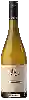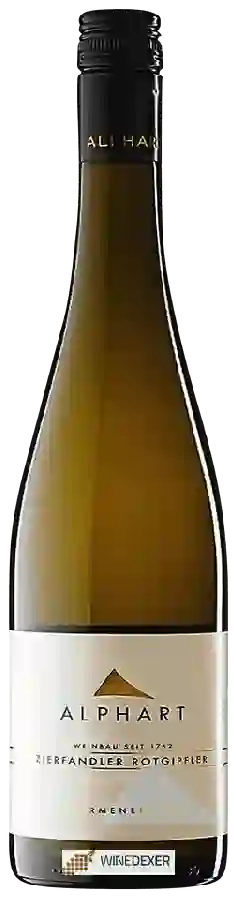
Weingut AlphartZierfandler - Rotgipfler
 White wine



This wine generally goes well with
The Zierfandler - Rotgipfler of the Weingut Alphart is in the top 30 of wines of Thermenregion.

Details and technical informations about Weingut Alphart's Zierfandler - Rotgipfler.
Discover the grape variety: Temjanika
Intensely aromatic muscat whites, with a pale golden robe and an ample palate, with explosive signature aromas of muscat, white flowers (orange blossom, jasmine), exotic fruits and fresh grape. Also as sweet and late-harvest wines. Grown mainly in North Macedonia (Tikveš) and central Serbia, defining the aromatic identity of Balkan white wines. Autochthonous white variety of Serbia and North Macedonia, identical to Tamjanika.
Last vintages of this wine
The best vintages of Zierfandler - Rotgipfler from Weingut Alphart are 2012, 2011, 2016, 2014 and 2018.
Informations about the Weingut Alphart
The Weingut Alphart is one of of the world's greatest estates. It offers 32 wines for sale in the of Thermenregion to come and discover on site or to buy online.

The wine region of Thermenregion
Austrian gem south of Vienna along the Wienerwald: signature native Zierfandler-Rotgipfler duo (found nowhere else) as king whites — concentrated, aromatic and full-bodied with notes of citrus, white-fleshed fruit, flowers and a spicy touch, lively balance of acidity and richness. Silky signature Sankt Laurent in red (cherry, raspberry, undergrowth, fine tannins) and Pinot Noir in the south on the Steinfeld gravels. DAC (2023), ~2,000 h sun/year, limestone-marl north, gravel south.
The wine region of Weinland
Vast German-speaking region in north-eastern Switzerland, the country's largest production area. Signature Pinot Noir (Blauburgunder): fine, fresh reds with notes of cherry, raspberry, undergrowth and sweet spices, silky tannins. Elegant, delicate style, often barrel-aged. Also light, floral Müller-Thurgau (Riesling-Sylvaner), lively, lemony native Räuschling, ample Pinot Gris.
The word of the wine: Phylloxera
Aphid that came from America and ravaged European vineyards at the end of the 19th century. It lives on the roots of the vine, from which it pumps the sap. The only vines capable of resisting it had to be imported from the United States, and then grafted onto their root system the wood of traditional French grape varieties. Today, grafted vines are always planted.