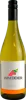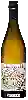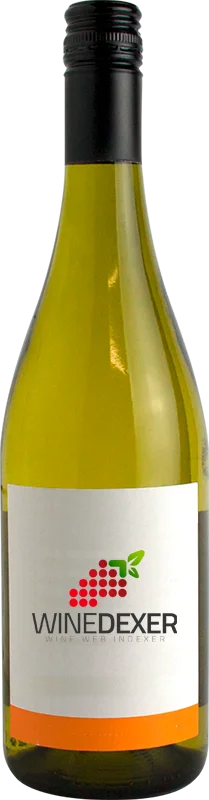
Weingut EgidiushofSauvignon Blanc Tonneau Trocken
 White wine
In the mouth this white wine is a with a nice freshness.
This wine generally goes well with vegetarian, shellfish or goat cheese.
Taste structure of the Sauvignon Blanc Tonneau Trocken from the Weingut Egidiushof
Light | Bold | |
Dry | Sweet | |
Soft | Acidic |
In the mouth the Sauvignon Blanc Tonneau Trocken of Weingut Egidiushof in the region of Pfalz is a with a nice freshness.
Food and wine pairings with Sauvignon Blanc Tonneau Trocken
Pairings that work perfectly with Sauvignon Blanc Tonneau Trocken



Original food and wine pairings with Sauvignon Blanc Tonneau Trocken
The Sauvignon Blanc Tonneau Trocken of Weingut Egidiushof matches generally quite well with dishes of shellfish, vegetarian or goat cheese such as recipes of chinese fondue, spinach and goat cheese quiche or baked béchamel potatoes.
Details and technical informations about Weingut Egidiushof's Sauvignon Blanc Tonneau Trocken.
Discover the grape variety: Prima
Cross between lival and cardinal obtained in 1974. It has been registered in the official catalogue of table grape varieties, list A1, since 1996.
Informations about the Weingut Egidiushof
The Weingut Egidiushof is one of of the world's great estates. It offers 52 wines for sale in the of Pfalz to come and discover on site or to buy online.

The wine region of Pfalz
Pfalz is a key wine producing region in western Germany, located between the Rhein/Rhine river and the low-lying Haardt mountain range (a natural continuation of the Alsatian Vosges). It covers a rectangle of land 45 miles (75km) Long and 15 miles (25km) wide. To the NorthLiesRheinhessen; to the South, the French border and Alsace. In terms of both quality and quantity, Pfalz is one of Germany's most important regions, and one which shows great promise for the future.
The word of the wine: Tartar (deposit)
White, chalky deposits that occur as a result of precipitation inside bottles and are often considered by consumers as a defect. They are in fact tartaric salts formed by tartaric acid, potassium and calcium naturally present in the wine. This deposit does not alter the quality of the wine and can be eliminated by a simple decanting.