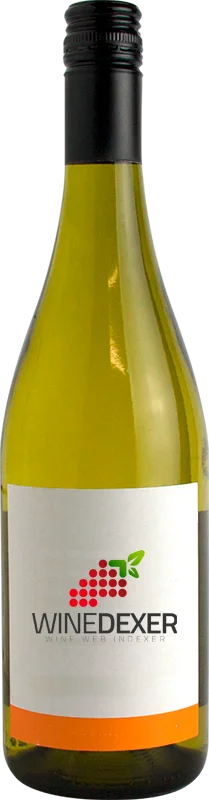
Weingut Axel BauerSauvignon Blanc Handwerk
 White wine



In the mouth this white wine is a with a nice freshness.
This wine generally goes well with vegetarian, shellfish or goat cheese.

Taste structure of the Sauvignon Blanc Handwerk from the Weingut Axel Bauer
Light | Bold | |
Dry | Sweet | |
Soft | Acidic |
In the mouth the Sauvignon Blanc Handwerk of Weingut Axel Bauer in the region of Baden is a with a nice freshness.
Food and wine pairings with Sauvignon Blanc Handwerk
Pairings that work perfectly with Sauvignon Blanc Handwerk



Original food and wine pairings with Sauvignon Blanc Handwerk
The Sauvignon Blanc Handwerk of Weingut Axel Bauer matches generally quite well with dishes of shellfish, vegetarian or goat cheese such as recipes of parsley knives, quiche with bacon and gruyère cheese or vegetable and goat cheese puff pastry.
Details and technical informations about Weingut Axel Bauer's Sauvignon Blanc Handwerk.
Discover the grape variety: Vernaccia di Oristano
Long-aged oxidative and structured whites with an amber robe, a dense palate with fine acidity on bitter almond, dried fruits (walnut), saline and marked oxidative aromas (sherry style). Aged under a veil of flor in the manner of Andalusian fino. Star of the Vernaccia di Oristano DOC, a great traditional Sardinian oxidative wine. Vernaccia variety grown in Sardinia, in the Oristano region.
Last vintages of this wine
The best vintages of Sauvignon Blanc Handwerk from Weingut Axel Bauer are 0
Informations about the Weingut Axel Bauer
The Weingut Axel Bauer is one of of the world's greatest estates. It offers 22 wines for sale in the of Baden to come and discover on site or to buy online.

The wine region of Baden
German capital of Pinot Noir (Spätburgunder): silky, fine reds with notes of red fruits, cherry, undergrowth and sweet spices, melted tannins. Round Grauburgunder (Pinot Gris), lively Weissburgunder, supple Müller-Thurgau, mineral Riesling. Germany's 3rd region (15,000 ha) in Baden-Württemberg facing Alsace, one of the country's warmest climates, volcanic soils at the Kaiserstuhl. Cradle of modern great German reds, elegant and fine.
The word of the wine: Champagne rosé
Often obtained by adding red wines (from Champagne), it is even the only vineyard where this practice is allowed. Some producers prefer the practice used in other regions, i.e. a short maceration to extract sufficient colouring matter. This results in winey rosés for meals. Elegant aperitif rosé is more often made from red wine coloured Chardonnay. Rosés can be vintage or non vintage.


