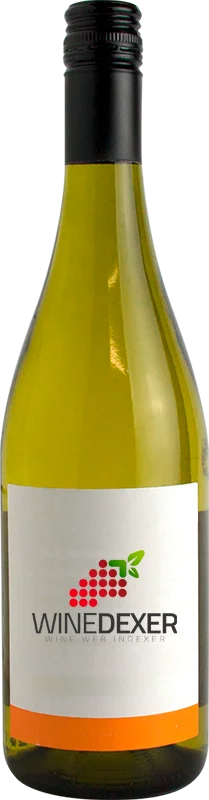
Winery Weinbau SixSix Silvaner
 White wine



This wine generally goes well with poultry, lean fish or shellfish.
Food and wine pairings with Six Silvaner
Pairings that work perfectly with Six Silvaner



Original food and wine pairings with Six Silvaner


The Six Silvaner of Winery Weinbau Six matches generally quite well with dishes of shellfish, spicy food or poultry such as recipes of cassolettes of scallops, mullet with onions and white wine or salmon koulibiac.
Details and technical informations about Winery Weinbau Six's Six Silvaner.
Discover the grape variety: Négret pounjut
An ancient grape variety endemic to the Fronton region in the Haute Garonne that could also be found in La Ville Dieu du Temple in the Lot et Garonne. Today, it is not very present in the vineyard and is on the verge of extinction. It is, however, registered in the Official Catalogue of wine grape varieties, list A. It should not be confused with Négret de Banhars, Négret Castrais or Négret de la Canourgue, and it should be noted that it is related to Prunelard. Négret pounjut is completely unknown in other wine-producing countries.
Last vintages of this wine
The best vintages of Six Silvaner from Winery Weinbau Six are 0, 2016
Informations about the Winery Weinbau Six
The Winery Weinbau Six is one of of the world's greatest estates. It offers 10 wines for sale in the of Franken to come and discover on site or to buy online.

The wine region of Franken
Franken, or Franconia in English, is a wine-growing region in the northwest of Germany's historic state of Bavaria. Though Bavaria may be more famous for its beer, Franken boasts a proud viticultural tradition and is one of the most unique regions in the country. There are just over 6,100 hectares (15,073 ac) of vines Planted in Franken and around 80 percent of these are white Grape varieties. Here, Riesling plays second fiddle to the often overlooked Silvaner and Müller-Thurgau.
The word of the wine: Serious
A Bordeaux term for small pebbles from the Pyrenees, eroded, rounded and transported by the Garonne to Aquitaine. They are mainly found on the left bank in the area.... known as the Graves, and further downstream in the Médoc. By extension, gravel is found in other regions, brought by other rivers or even glaciers.