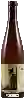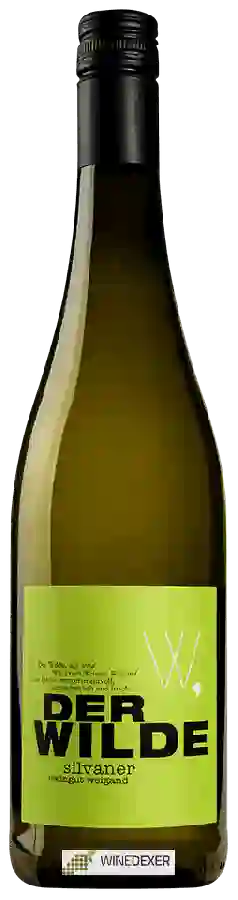
Weingut WeigandDer Wilde Silvaner
 White wine



In the mouth this white wine is a with a nice freshness.
This wine generally goes well with pork, vegetarian or poultry.

Taste structure of the Der Wilde Silvaner from the Weingut Weigand
Light | Bold | |
Dry | Sweet | |
Soft | Acidic |
In the mouth the Der Wilde Silvaner of Weingut Weigand in the region of Franken is a with a nice freshness.
Wine flavors and olphactive analysis



On the nose the Der Wilde Silvaner of Weingut Weigand in the region of Franken often reveals types of flavors of earth, microbio or oak and sometimes also flavors of tree fruit, citrus fruit or tropical fruit.
Food and wine pairings with Der Wilde Silvaner
Pairings that work perfectly with Der Wilde Silvaner



Original food and wine pairings with Der Wilde Silvaner


The Der Wilde Silvaner of Weingut Weigand matches generally quite well with dishes of veal, pork or vegetarian such as recipes of sauté of veal with mushrooms, tartiflette or nanie's diced ham quiche.
Details and technical informations about Weingut Weigand's Der Wilde Silvaner.
Discover the grape variety: Sultanine
Seedless table grape variety with long bunches, golden berries with thin skin and crunchy flesh, with a sweet, fresh flavour. Very productive. Grown worldwide (California, Turkey, Iran, Australia, Chile) for fresh consumption, dried raisins (sultanas) and sometimes for neutral white wines. Also known as Thompson Seedless in the United States. One of the oldest cultivated table grape varieties, probably originating from Turkey or Iran.
Last vintages of this wine
The best vintages of Der Wilde Silvaner from Weingut Weigand are 2018, 2017, 2016, 0 and 2015.
Informations about the Weingut Weigand
The Weingut Weigand is one of of the world's greatest estates. It offers 29 wines for sale in the of Franken to come and discover on site or to buy online.

The wine region of Franken
Homeland of German Silvaner: dry, straight, mineral and lively whites with notes of green apple, citrus, fresh herbs and a saline touch, planted here for over 350 years (1,500 ha, a quarter of the vineyard). Also supple, floral Müller-Thurgau, taut Riesling, aromatic Bacchus. Some discreet reds (Spätburgunder). 6,040 ha in Bavaria along the Main around Würzburg, red sandstone and shell-limestone soils.
The word of the wine: Trader-Handler
Champagne term for a merchant who buys grapes to make a Champagne wine himself.