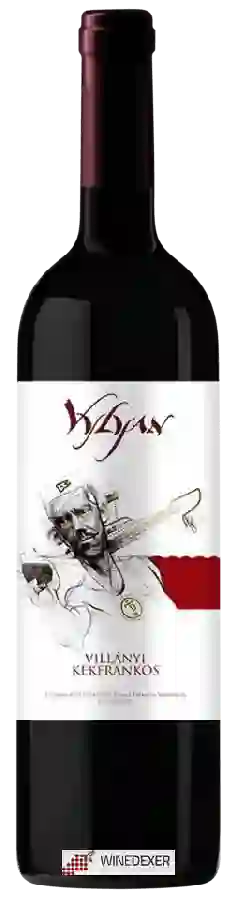
Winery VylyanKékfrankos
 Red wine



This wine generally goes well with

Wine flavors and olphactive analysis




On the nose the Kékfrankos of Winery Vylyan in the region of Dél-Pannónia often reveals types of flavors of non oak, earth or oak and sometimes also flavors of spices, red fruit or black fruit.
Details and technical informations about Winery Vylyan's Kékfrankos.
Discover the grape variety: Lagorthi
Lively, structured altitude whites with a pale golden robe, an airy, taut palate with fine acidity, and signature aromas of citrus (lemon), white flowers, white-fleshed fruits (pear), and calcareous mineral notes. Excellent ageing potential. The star of Patras and Achaia whites (Peloponnese), thriving on high-altitude limestone terroirs of the northern Peloponnese.
Last vintages of this wine
The best vintages of Kékfrankos from Winery Vylyan are 2014, 2012, 0, 2015 and 2013.
Informations about the Winery Vylyan
The Winery Vylyan is one of of the world's great estates. It offers 47 wines for sale in the of Villány to come and discover on site or to buy online.

The wine region of Villány
Hungary's hottest region, kingdom of powerful reds in the south. Signature Cabernet Franc ("Villányi Franc"): deep and refined with notes of ripe blackcurrant, black pepper, violet, graphite and tobacco, firm tannins and great ageing potential. Also fleshy, spicy Kékfrankos (Blaufränkisch), supple, fruity Portugieser, round Merlot and dense Cabernet Sauvignon. Successful Bordeaux blends.
The wine region of Dél-Pannónia
Southern Hungary (Pécs, Szekszárd, Villány, Tolna), ~7,800 ha on loess and limestone, continental climate with Mediterranean influences — bastion of great Hungarian reds. Kékfrankos and Kadarka signatures as native red kings: spiced and structured with black cherry, blackberry, plum, paprika, pepper and smoky hint, firm tannins. Ripe Cabernet Franc and Sauvignon in Bordeaux blends at Villány. Specialities Szekszárdi Bikavér and unique Cirfandli white at Pécs (spiced, honeyed).
The word of the wine: Wooded
A set of aromas brought about by ageing in barrels (usually oak). This can be pleasant when, in small doses, it brings a touch of spice, roast or vanilla to an already constructed ensemble. When the violent woodiness dominates the wine, it is quickly tiring. Easily identifiable aromatically, it is sought after (to the point of abuse) by the makers of coarse wines. New World manufacturers and, alas, some French winemakers use oak chips to impart the woody taste, which is tantamount to artificial flavoring.