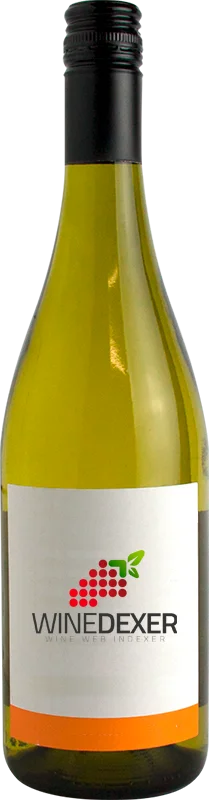
Winery VajnoryFeteasca Regala Pesecká Leánka
 White wine
This wine generally goes well with
Details and technical informations about Winery Vajnory's Feteasca Regala Pesecká Leánka.
Discover the grape variety: Folle blanche
As its name suggests, the folle blanche is a white grape variety. Originally from the west of France, it was used to make Cognac and Armagnac brandies as early as the 17th century and was renowned for its finesse and fragrant nose. Replaced by Ugni Blanc following the phylloxera invasion, the folle blanche is now grown in small quantities. It is a grape variety with juicy, sweet, medium-sized bunches and berries with a white/green skin. Its worst enemy is grey rot. As it is an early variety and its buds come out early, it is particularly afraid of spring frosts. It likes short pruning, a method that limits the production of grapes but increases their quality. It also prefers mineral-rich soils, and its vineyards cover about 3,000 hectares. It is used in the production of the AOC Gros-plant du Pays nantais to produce a lively white wine with little alcohol but marked acidity.
Informations about the Winery Vajnory
The Winery Vajnory is one of of the world's greatest estates. It offers 7 wines for sale in the of Malokarpatská to come and discover on site or to buy online.

The wine region of Malokarpatská
The wine region of Malokarpatská of Slovak Republic. Wineries and vineyards like the Domaine Rariga or the Domaine Vladimir Valenta produce mainly wines white, red and pink. The most planted grape varieties in the region of Malokarpatská are Cabernet-Sauvignon, Riesling and Gewurztraminer, they are then used in wines in blends or as a single variety. On the nose of Malokarpatská often reveals types of flavors of tree fruit, apples or citrus fruit and sometimes also flavors of non oak, earth or microbio.
The word of the wine: Performance
Quantity of grapes harvested per hectare. In AOC, the average yield is limited on the proposal of the appellation syndicate, validated by the Inao. The use of high-performance plant material (especially clones) and better control of vine diseases have increased yields. This is not without consequences on the quality of the wines (dilution) and on the state of the market (too much wine). We must not over-simplify: low yields are not synonymous with quality, and it is often in years with generous harvests that we find the greatest vintages (1982 and 1986 in Bordeaux, 1996 in Champagne, 1990 and 2005 in Burgundy...).