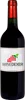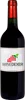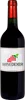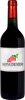
Winery Toni HartiLove Rosi Rosito
 Pink wine


This wine generally goes well with
Details and technical informations about Winery Toni Harti's Love Rosi Rosito.
Discover the grape variety: Divico
Interspecific cross between gamaret and bronner obtained in 1997 by Jean-Laurent Spring at the Agroscope Research Station in Pully (Switzerland). It should be noted that the divona is issued from the same cross.
Last vintages of this wine
The best vintages of Love Rosi Rosito from Winery Toni Harti are 0
Informations about the Winery Toni Harti
The Winery Toni Harti is one of of the world's greatest estates. It offers 2 wines for sale in the of Burgenland to come and discover on site or to buy online.

The wine region of Burgenland
Burgenland is a large wine-producing region on the eastern border of Austria. Despite the country's image as the producer of some of the world's finest white wines, Austria is also home to a thriving red wine culture: Burgenland, with its sunny, continental summers, is the country's key red wine region, with its wines based mainly on the Blaufränkisch and Zweigelt grape varieties. Sweet, botrytized wines are also a specialty of the region, particularly in the Terroir surrounding the Neusiedlersee lake. The region occupies a narrow strip of land that runs from the Danube River down to Steiermark in the South.
The wine region of Weinland
Weinviertel DAC – whose name translates as "wine quarter" – is an appellation in Niederösterreich (Lower Austria). It is by far the largest Districtus Austriae Controllatus wine region in Austria. It was also the first Austrian wine region to be given that title, in 2002, with a DAC Reserve designation added in 2009. The designation applies only to white wines from the Grüner Veltliner Grape variety.
The word of the wine: Animal
Generic smell of aromatic families reminiscent of fur, game, musk, civet, amber and sometimes unpleasant smells of wet hair. The old books on tasting give as an example of animal aroma the belly of hare.