The Winery Tokaj Classic of Tokaj
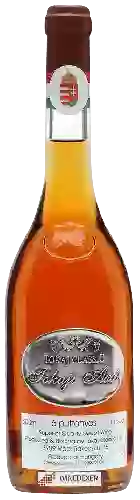
The Winery Tokaj Classic is one of the largest wineries in the world. It offers 16 wines for sale in of Tokaj to come and discover on site or to buy online.
Looking for the best Winery Tokaj Classic wines in Tokaj among all the wines in the region? Check out our tops of the best red, white or effervescent Winery Tokaj Classic wines. Also find some food and wine pairings that may be suitable with the wines from this area. Learn more about the region and the Winery Tokaj Classic wines with technical and enological descriptions.
How Winery Tokaj Classic wines pair with each other generally quite well with dishes of spicy food or sweet desserts such as recipes of mutton stew with potatoes and garlic or plain cupcakes.
On the nose the sweet wine of Winery Tokaj Classic. often reveals types of flavors of apricot, ginger or raisin and sometimes also flavors of orange, honey or dried apricot.
Tokaj (formerly Tokaj-Hegyalja) has Long been Hungary's most famous and respected wine region, thanks mostly to its nectar-like, botrytized Tokaji dessert wines. The region and its wine are held in such esteem in Hungary that the national anthem thanks God for it:
Tokaj szolovesszein nektárt csepegtettél
- into the vineyards of Tokaj you dripped Sweet nectar
The region is located in the northeast of Hungary, near the border with Slovakia. Comprising roughly 30 small towns and villages, it measures 40 kilometers (25 miles) from southwest to northeast, making it roughly the same Size as Burgundy's Côte d'Or.
At its very southern edge is the town of Tokaj from which the region and its wines ultimate take their name.
The main centers of Tokaji wine production are the towns of Mad, Tarcal and Tokaj itself.
Tokaj's Climate is relatively Warm. The winegrowing area is protected by the vast crescent-shaped mountain range (the Carpathians) which dominates neighboring Slovakia and Romania.
The region's soils are a patchwork of various types.
Volcanic clays are to be found in the higher sites on the many hillsides here, and on lower-lying sites layers of loess and other sedimentary soils cover the bedrock. Closer to the banks of the Bodrog, the river which flows along the region's eastern edge, sandier soils prevail, particularly around Tokaj town.
The Grape varieties used to make Tokaji wines are Furmint, Harslevelu and Sárga Muskotály (Muscat Blanc), in that order of importance. Furmint, which dominates the Tokaji blend, is renowned for its naturally high Acidity, high sugar levels and spicy aromatic profile.
How Winery Tokaj Classic wines pair with each other generally quite well with dishes such as recipes .
On the nose the white wine of Winery Tokaj Classic. often reveals types of flavors of earth, tree fruit.
Muscadelle white is a grape variety that originated in France (Bergerac). It produces a variety of grape specially used for wine making. It is rare to find this grape to eat on our tables. This variety of grape is characterized by bunches of medium size, and grapes of medium caliber. Muscadelle white can be found in several vineyards: South-West, Cognac, Bordeaux, Armagnac, Provence & Corsica, Rhone valley, Loire valley, Savoie & Bugey, Beaujolais, Languedoc & Roussillon.
Planning a wine route in the of Tokaj? Here are the wineries to visit and the winemakers to meet during your trip in search of wines similar to Winery Tokaj Classic.
White muscat is a white grape variety of Greek origin. Present in several Mediterranean vineyards, it has several synonyms such as muscat de Die, muscat blanc and frontignac. In France, it occupies a little less than 7,000 ha out of a total of 45,000 ha worldwide. Its young shoots are downy. Its youngest leaves are shiny, bronzed and scabrous. The berries and bunches of this variety are all medium-sized. The flesh of the berries is juicy, sweet and firm. Muscat à petits grains has a second ripening period and buds early in the year. It is moderately vigorous and must be pruned short. It likes poor, stony slopes. This variety is often exposed to spring frosts. It fears mildew, wasps, grape worms, court-noué, grey rot and powdery mildew. Muscat à petits grains is used to make rosé wines and dry white wines. Orange, brown sugar, barley sugar and raisins are the known aromas of these wines.