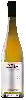
Winery ThürkindGröster Steinberg Weissburgunder Trocken
 White wine



In the mouth this white wine is a with a nice freshness.
This wine generally goes well with rich fish (salmon, tuna etc), shellfish or mild and soft cheese.

Taste structure of the Gröster Steinberg Weissburgunder Trocken from the Winery Thürkind
Light | Bold | |
Dry | Sweet | |
Soft | Acidic |
In the mouth the Gröster Steinberg Weissburgunder Trocken of Winery Thürkind in the region of Saale-Unstrut is a with a nice freshness.
Food and wine pairings with Gröster Steinberg Weissburgunder Trocken
Pairings that work perfectly with Gröster Steinberg Weissburgunder Trocken



Original food and wine pairings with Gröster Steinberg Weissburgunder Trocken

The Gröster Steinberg Weissburgunder Trocken of Winery Thürkind matches generally quite well with dishes of rich fish (salmon, tuna etc), shellfish or mild and soft cheese such as recipes of sea bass wrapped in salt crust, scallops or winter vegetable crown pie.
Details and technical informations about Winery Thürkind's Gröster Steinberg Weissburgunder Trocken.
Discover the grape variety: Pé de perdrix
Simple, light, fruity reds with a pale ruby colour, silky tannins and an airy palate with moderate acidity. Understated aromas of red fruits. Discrete rustic profile. Nearly extinct, preserved in INRAE varietal collections for its heritage value; it reflects the pre-phylloxera ampelographic diversity of south-west France and is among the heritage varieties under study. A rare French black grape, once grown in the South-West.
Last vintages of this wine
The best vintages of Gröster Steinberg Weissburgunder Trocken from Winery Thürkind are 0, 2015, 2017
Informations about the Winery Thürkind
The Winery Thürkind is one of of the world's greatest estates. It offers 22 wines for sale in the of Saale-Unstrut to come and discover on site or to buy online.

The wine region of Saale-Unstrut
Germany's northernmost region (Saxony-Anhalt), ~650 ha. Nordic whites that are dry, lively and mineral with signature notes of green apple, citrus, white flowers, fresh herbs and a crisp finish — a direct, thirst-quenching style. Dominant Muller-Thurgau (~22%) light and floral, Weissburgunder (Pinot Blanc) round and precise, herbaceous Silvaner and taut Riesling. Early grapes suited to the harsh continental climate.
The word of the wine: Chaptalization
The addition of sugar at the time of fermentation of the must, an ancient practice, but theorized by Jean-Antoine Chaptal at the dawn of the 19th century. The sugar is transformed into alcohol and allows the natural degree of the wine to be raised in a weak or cold year, or - more questionably - when the winegrower has a harvest that is too large to obtain good maturity.