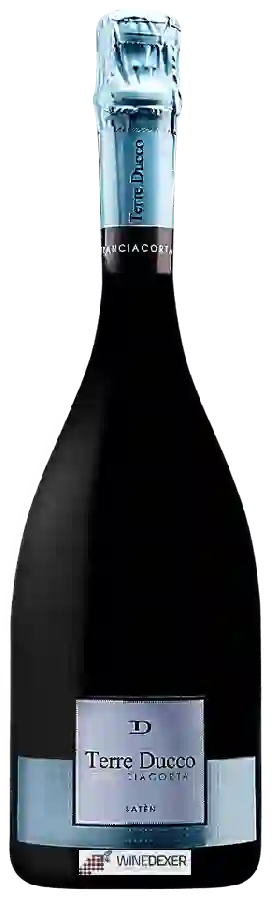
Winery Terre DuccoFranciacorta Satén
 Sparkling wine



This wine generally goes well with

Details and technical informations about Winery Terre Ducco's Franciacorta Satén.
Discover the grape variety: Zibibbo
Intensely perfumed, raisined aromatic whites with an amber-golden robe, a luscious to liqueur palate, showing powerful signature aromas of muscat, dried fruits (fig, dried apricot, raisin), flowers (orange blossom), honey and spices. The undisputed star of Moscato di Pantelleria DOC as passito, the typical expression of heroic island viticulture. The Italian synonym for Muscat d'Alexandrie grown in Sicily, particularly on the island of Pantelleria.
Last vintages of this wine
The best vintages of Franciacorta Satén from Winery Terre Ducco are 2015, 2014, 0, 2016
Informations about the Winery Terre Ducco
The Winery Terre Ducco is one of of the world's greatest estates. It offers 6 wines for sale in the of Franciacorta to come and discover on site or to buy online.

The wine region of Franciacorta
The Italian Champagne, the country's largest DOCG zone for classic-method sparklers. Fine, refined bubbles with signature notes of green apple, citrus, brioche, toasted almond and white flowers, taut and creamy finish (18 months minimum on lees, up to 60 for Riserva). Based on dominant Chardonnay, Pinot Noir for structure, Pinot Blanc for roundness. Satèn (low pressure, silky) and fruity rosé versions.
The wine region of Lombardia
Three poles. Franciacorta DOCG, Italy's answer to Champagne: elegant brioche traditional-method sparklers (Chardonnay, Pinot Noir, Pinot Blanc), fine bubble and mineral profile. Alpine Valtellina: Nebbiolo (alias Chiavennasca) with fine tannins and red fruits, powerful Sforzato passito. Oltrepò Pavese: fresh Pinot Noir and fruity-sparkling Bonarda.
The word of the wine: Deposit
Solid particles that can naturally coat the bottom of a bottle of wine. It is rather a guarantee that the wine has not been mistreated: in fact, to avoid the natural deposit, rather violent processes of filtration or cold passage (- 7 or - 8 °C) are used in order to precipitate the tartar (the small white crystals that some people confuse with crystallized sugar: just taste to dissuade you from it)


