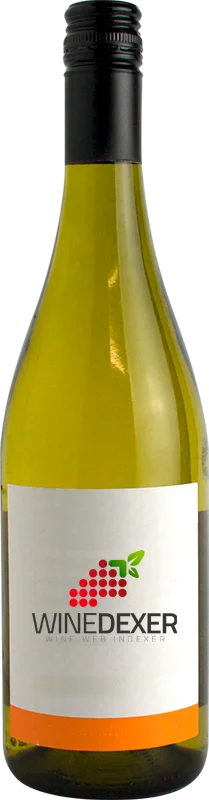
Winery Terre d'AioneFalanghina
 White wine
In the mouth this white wine is a powerful.
This wine generally goes well with vegetarian, appetizers and snacks or shellfish.
Taste structure of the Falanghina from the Winery Terre d'Aione
Light | Bold | |
Dry | Sweet | |
Soft | Acidic |
In the mouth the Falanghina of Winery Terre d'Aione in the region of Campania is a powerful.
Food and wine pairings with Falanghina
Pairings that work perfectly with Falanghina



Original food and wine pairings with Falanghina
The Falanghina of Winery Terre d'Aione matches generally quite well with dishes of shellfish, vegetarian or appetizers and snacks such as recipes of scallops on a bed of leeks, cream and tuna quiche or beet hummus dip.
Details and technical informations about Winery Terre d'Aione's Falanghina.
Discover the grape variety: Ruby seedless
Cross between the emperor and the 75 Pirovano or sultana moscata obtained in 1939 in the United States by Professor Harold P. Olmo of the University of Davis (California). It can also be found in Australia. This variety should not be confused with the ruby-cabernet and the rubi which is a natural pink mutation of the italia.
Informations about the Winery Terre d'Aione
The Winery Terre d'Aione is one of of the world's greatest estates. It offers 7 wines for sale in the of Campania to come and discover on site or to buy online.

The wine region of Campania
Campania is a region that forms the "tibia" of the boot of Italy, and whose largest city is Naples. Its name comes from Campania felix, a Latin phrase meaning roughly "happy land". The region has strong historical links with wine and vineyards, dating back to the 12th century BC, and is one of the oldest wine regions in Italy. The considerable influence of ancient empires, including the Greeks, Romans and Byzantines, means that some of the varieties in this region are linked to historical legends.
The word of the wine: Sour
Said of a wine that is unpleasantly pungent and has a vinegar-like odour.