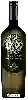
Winery TelaroFalanghina
 White wine



In the mouth this white wine is a powerful.
This wine generally goes well with vegetarian, appetizers and snacks or shellfish.
Taste structure of the Falanghina from the Winery Telaro
Light | Bold | |
Dry | Sweet | |
Soft | Acidic |
In the mouth the Falanghina of Winery Telaro in the region of Campania is a powerful.
Wine flavors and olphactive analysis

On the nose the Falanghina of Winery Telaro in the region of Campania often reveals types of flavors of earth, tree fruit.
Food and wine pairings with Falanghina
Pairings that work perfectly with Falanghina



Original food and wine pairings with Falanghina
The Falanghina of Winery Telaro matches generally quite well with dishes of shellfish, vegetarian or appetizers and snacks such as recipes of scallops or scallops express with cognac, light tuna-tomato quiche (without cream) or black tapenade.
Details and technical informations about Winery Telaro's Falanghina.
Discover the grape variety: Mouyssaguès
Mouyssaguès is a grape variety that originated in the southwest of France. Today it occupies just under a hectare, whereas in the past it filled the entire Lot valley. Its adult leaves have between 7 and 9 lobes. These turn completely red in the autumn. Its blue-black berries are elliptical and short. As for its truncated cone-shaped bunches, they are of medium size. They are also compact and winged. Mouyssaguès has only one approved clone, 1.150. A dozen others have been planted in Aveyron. Mouyssaguès can bud in the middle or late, 8 to 10 days after Chasselas. It ripens early for the second time. Vigorous, it is not very sensitive to the various diseases common to these grape varieties. Although productive, it is preferable to prune it long. The mouyssaguès makes a very astringent and coloured wine. This variety can also be called negret, faroneux, rouge menu or peyregord. Because of its high yield, it is often called the poor man's vine.
Last vintages of this wine
The best vintages of Falanghina from Winery Telaro are 2016, 2015, 2014, 0 and 2017.
Informations about the Winery Telaro
The Winery Telaro is one of of the world's greatest estates. It offers 21 wines for sale in the of Campania to come and discover on site or to buy online.

The wine region of Campania
Campania is a region that forms the "tibia" of the boot of Italy, and whose largest city is Naples. Its name comes from Campania felix, a Latin phrase meaning roughly "happy land". The region has strong historical links with wine and vineyards, dating back to the 12th century BC, and is one of the oldest wine regions in Italy. The considerable influence of ancient empires, including the Greeks, Romans and Byzantines, means that some of the varieties in this region are linked to historical legends.
The word of the wine: Gross
Champagne with between 6 and 15 grams of sugar (see dosage liqueur).