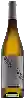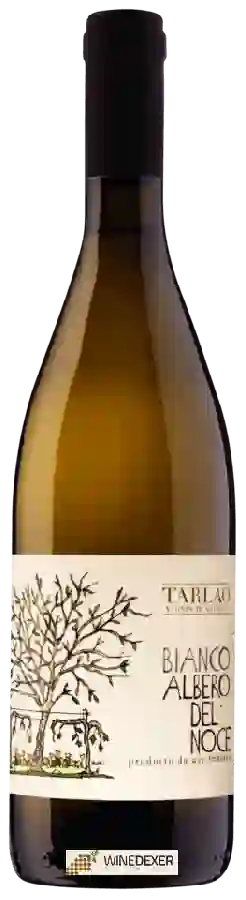
Winery TarlaoAlbero del Noce
 White wine



In the mouth this white wine is a powerful.
This wine generally goes well with lean fish, shellfish or mature and hard cheese.

Taste structure of the Albero del Noce from the Winery Tarlao
Light | Bold | |
Dry | Sweet | |
Soft | Acidic |
In the mouth the Albero del Noce of Winery Tarlao in the region of Friuli-Venezia Giulia is a powerful.
Food and wine pairings with Albero del Noce
Pairings that work perfectly with Albero del Noce



Original food and wine pairings with Albero del Noce


The Albero del Noce of Winery Tarlao matches generally quite well with dishes of pasta, shellfish or mature and hard cheese such as recipes of pasta with boursin, spanish seafood paella or 3 cheese ravioli gratin.
Details and technical informations about Winery Tarlao's Albero del Noce.
Discover the grape variety: Domina
Colourful and structured reds with a deep purple colour, firm tannins and a full palate, offering signature aromas of black cherry, plum, liquorice and spicy notes. Also used to add body to blends. Grown in Franconia and the German Palatinate for characterful dry reds. German black variety obtained in 1927 at Geilweilerhof (Portugieser × Pinot Noir), early-ripening and productive.
Last vintages of this wine
The best vintages of Albero del Noce from Winery Tarlao are 0
Informations about the Winery Tarlao
The Winery Tarlao is one of of the world's greatest estates. It offers 10 wines for sale in the of Friuli Aquileia to come and discover on site or to buy online.

The wine region of Friuli Aquileia
DOC of Friuli-Venezia Giulia between the Alps and the Adriatic, alluvial soils, mixed continental-maritime climate with cool nights. Friulano the white signature (min. 50%): tense and precise with green apple, pear, almond, white flowers and mineral touch, thirst-quenching. Pinot Grigio, lively Sauvignon, broad Chardonnay, Malvasia Istriana as complements.
The wine region of Friuli-Venezia Giulia
Italian benchmark of great whites of elegance and minerality. Emblematic Friulano with notes of fresh almond, pear and white flowers, taut Ribolla Gialla, precise Pinot Grigio, lively Sauvignon and balanced Chardonnay. Rare sweet Picolit (DOCG), saline Malvasia Istriana. Rising reds: fruity spicy Refosco, more tannic Pignolo and Schioppettino.
The word of the wine: Density per hectare
Number of vines per hectare. For the same yield, a vine planted with 3,000 vines per hectare bears many more bunches (per vine) than a vine planted with 10,000. The grapes will therefore be less rich in sugar and polyphenols (tannins, aromas...).