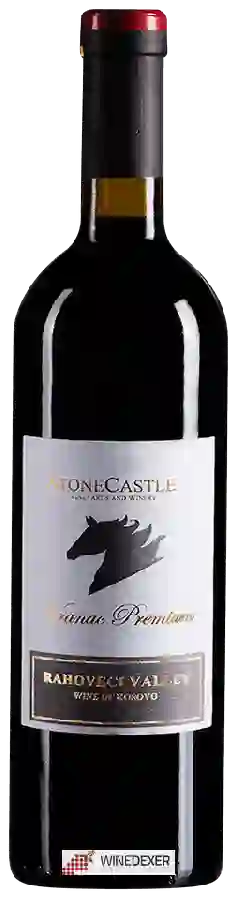
Winery Stone CastleVranac Premium
 Red wine


This wine generally goes well with
The Vranac Premium of the Winery Stone Castle is in the top 5 of wines of Kosovo and in the top 5 of wines of Metohija.
Wine flavors and olphactive analysis



On the nose the Vranac Premium of Winery Stone Castle in the region of Metohija often reveals types of flavors of non oak, earth or oak and sometimes also flavors of spices, red fruit or black fruit.
Details and technical informations about Winery Stone Castle's Vranac Premium.
Discover the grape variety: Couderc noir
Natural interspecific crossing between Jaeger 70 (Vitis Rupestris x Vitis Lincecumii) and an unknown Vitis Vinifera discovered by Eugène Contassot, the seeds from this crossing having been offered to/seeded by Georges Couderc. This direct-producing hybrid was the most widely planted, particularly in the south of France. There are still a few strains in production today, but it is practically no longer multiplied, although it is registered in the Official Catalogue of Vine Varieties, list A1. - Synonymy: Couderc 7120, Contassot 20 (for all the synonyms of the varieties, click here!).
Last vintages of this wine

The best vintages of Vranac Premium from Winery Stone Castle are 2015, 2009, 2014, 2013 and 0.
Informations about the Winery Stone Castle
The Winery Stone Castle is one of of the world's greatest estates. It offers 24 wines for sale in the of Metohija to come and discover on site or to buy online.

The wine region of Metohija
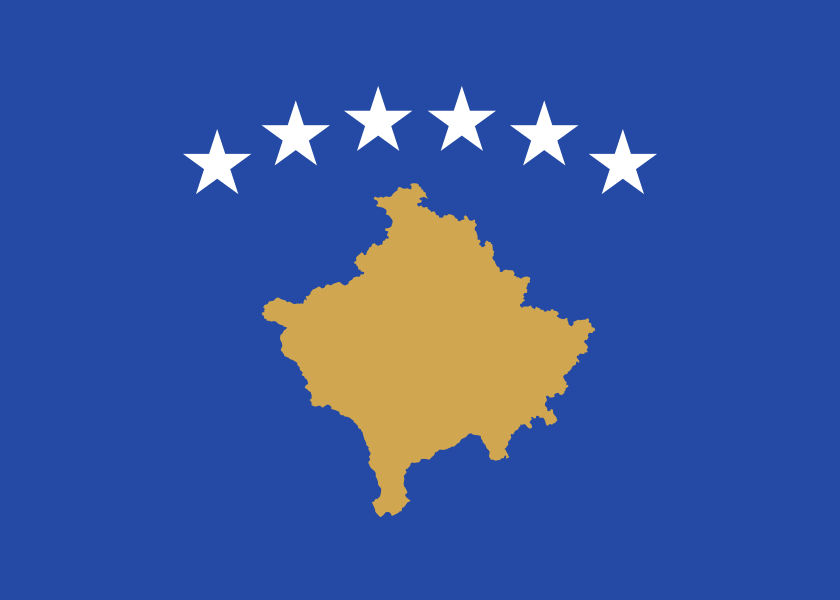
Kosovo is a region of south-eastern Europe, once an autonomous province within the former Yugoslavia. Until the outbreak of civil war, Kosovo had a substantial area of productive vineyards. Many were then abandoned, and the industry is still in the early stages of recovery. This is a disputed land, claimed as sovereign territory by Serbia but seen as independent by the ethnic Albanian majority who live there.
The word of the wine: Second fermentation
In the making of champagne, fermentation of the base wine to which is added the liqueur de tirage and which takes place in the bottle. This second fermentation produces the carbon dioxide, and therefore the bubbles that make up the effervescence of the wine.