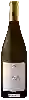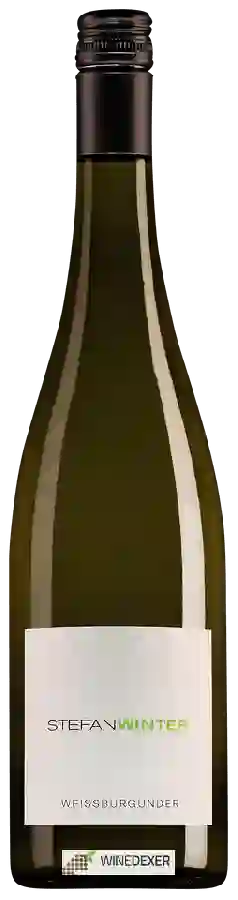
Winery Stefan WinterWeissburgunder
 White wine



In the mouth this white wine is a with a nice freshness.
This wine generally goes well with rich fish (salmon, tuna etc), shellfish or mild and soft cheese.

Taste structure of the Weissburgunder from the Winery Stefan Winter
Light | Bold | |
Dry | Sweet | |
Soft | Acidic |
In the mouth the Weissburgunder of Winery Stefan Winter in the region of Rheinhessen is a with a nice freshness.
Wine flavors and olphactive analysis


On the nose the Weissburgunder of Winery Stefan Winter in the region of Rheinhessen often reveals types of flavors of earth, tree fruit or citrus fruit and sometimes also flavors of tropical fruit.
Food and wine pairings with Weissburgunder
Pairings that work perfectly with Weissburgunder



Original food and wine pairings with Weissburgunder

The Weissburgunder of Winery Stefan Winter matches generally quite well with dishes of rich fish (salmon, tuna etc), shellfish or mild and soft cheese such as recipes of salmon burger, magic marinade (for shrimps, scallops, fish...) or mont d'or in the oven.
Details and technical informations about Winery Stefan Winter's Weissburgunder.
Discover the grape variety: Boskoop glory
Simple, fruity reds with a clear ruby robe, supple tannins and a light palate with preserved acidity, featuring characteristic foxy aromas of Labrusca varieties, red fruits and herbal notes. Early-ripening and disease-resistant. Grown mainly under glass in the Netherlands, Belgium, Germany and the UK, used primarily as a table grape in northern climates. Dutch hybrid (vinifera × labrusca), discovered around 1900 by Gérard Van Tol.
Last vintages of this wine
The best vintages of Weissburgunder from Winery Stefan Winter are 2019, 2018, 0, 2016 and 2017.
Informations about the Winery Stefan Winter
The Winery Stefan Winter is one of of the world's great estates. It offers 76 wines for sale in the of Rheinhessen to come and discover on site or to buy online.

The wine region of Rheinhessen
71% white region: Riesling is king (5,000 ha), dry to off-dry, ripe yellow fruit, apple, citrus and fine saline minerality. Supple, floral Müller-Thurgau for everyday, the world's largest Silvaner plantation with herbaceous, straight notes. Historic cradle of off-sweet Liebfraumilch. Some supple reds (Dornfelder, Spätburgunder).
The word of the wine: Cellar
A place for storing and ageing wines in bottles. This term designates both the cellar of a private individual and that of a restaurant. It is also a store dedicated to the retail sale of wine.