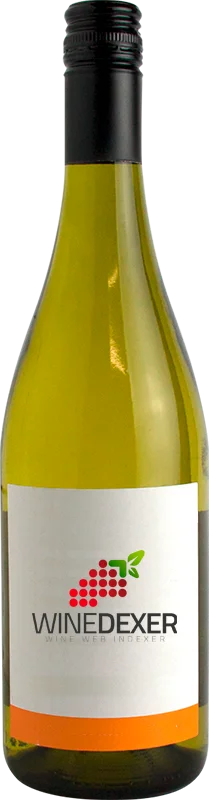
Winery StahlSilvaner Literweise
 White wine
In the mouth this white wine is a with a nice freshness.
This wine generally goes well with pork, vegetarian or poultry.

Taste structure of the Silvaner Literweise from the Winery Stahl
Light | Bold | |
Dry | Sweet | |
Soft | Acidic |
In the mouth the Silvaner Literweise of Winery Stahl in the region of Franken is a with a nice freshness.
Food and wine pairings with Silvaner Literweise
Pairings that work perfectly with Silvaner Literweise



Original food and wine pairings with Silvaner Literweise


The Silvaner Literweise of Winery Stahl matches generally quite well with dishes of veal, pork or vegetarian such as recipes of sliced endives with ham, tartiflette or quiche with leeks and fresh salmon from flo.
Details and technical informations about Winery Stahl's Silvaner Literweise.
Discover the grape variety: Italia Rubi
Table grape with long bunches and elongated red-violet berries, thin skin and muscat-flavoured flesh, sweet and aromatic taste. Rarely vinified. Grown for fresh consumption in Italy, Spain, the Maghreb and South America, appreciated for its attractive appearance and muscat flavour in mass retail. Italian black table grape variety, a red-violet skin mutation of the Italia grape.
Informations about the Winery Stahl
The Winery Stahl is one of of the world's great estates. It offers 72 wines for sale in the of Franken to come and discover on site or to buy online.

The wine region of Franken
Homeland of German Silvaner: dry, straight, mineral and lively whites with notes of green apple, citrus, fresh herbs and a saline touch, planted here for over 350 years (1,500 ha, a quarter of the vineyard). Also supple, floral Müller-Thurgau, taut Riesling, aromatic Bacchus. Some discreet reds (Spätburgunder). 6,040 ha in Bavaria along the Main around Würzburg, red sandstone and shell-limestone soils.
The word of the wine: Terroir
Strictly speaking, the notion of terroir corresponds to the geological characteristics of a vineyard. However, when we talk about terroir, we take into account the soil, the climate (even the microclimate), the flora, the fauna, and the human factor that characterizes the practices that make up the art of the craft.