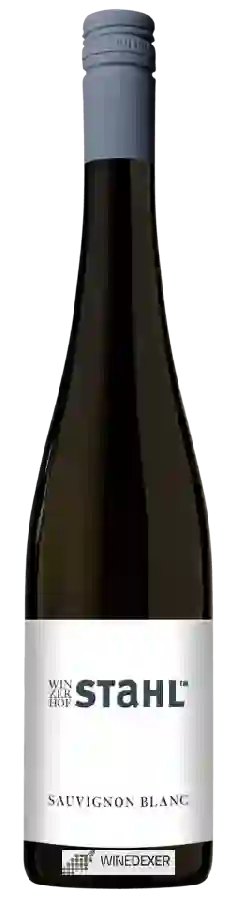
Winery StahlSauvignon Blanc
 White wine


In the mouth this white wine is a with a nice freshness.
This wine generally goes well with vegetarian, shellfish or goat cheese.

Taste structure of the Sauvignon Blanc from the Winery Stahl
Light | Bold | |
Dry | Sweet | |
Soft | Acidic |
In the mouth the Sauvignon Blanc of Winery Stahl in the region of Franken is a with a nice freshness.
Food and wine pairings with Sauvignon Blanc
Pairings that work perfectly with Sauvignon Blanc


Original food and wine pairings with Sauvignon Blanc
The Sauvignon Blanc of Winery Stahl matches generally quite well with dishes of shellfish, vegetarian or goat cheese such as recipes of paella de marisco (seafood paella), quiche without eggs or tian of courgettes, potatoes and goat cheese.
Details and technical informations about Winery Stahl's Sauvignon Blanc.
Discover the grape variety: Marzemino
Supple and fruity reds with a clear ruby colour and melted tannins, on intense aromas of red fruits (cherry, raspberry), plum, violet, sweet spices and herbal notes. Round palate, fresh finish. Star of Trentino Marzemino DOC (notably in the Vallagarina valley, southern Trentino), celebrated by Mozart in Don Giovanni ("versa il vino, eccellente Marzemino!"). Also grown in Lombardy. Native Italian variety from the north-east.
Last vintages of this wine
The best vintages of Sauvignon Blanc from Winery Stahl are 0, 2020
Informations about the Winery Stahl
The Winery Stahl is one of of the world's great estates. It offers 72 wines for sale in the of Franken to come and discover on site or to buy online.

The wine region of Franken
Homeland of German Silvaner: dry, straight, mineral and lively whites with notes of green apple, citrus, fresh herbs and a saline touch, planted here for over 350 years (1,500 ha, a quarter of the vineyard). Also supple, floral Müller-Thurgau, taut Riesling, aromatic Bacchus. Some discreet reds (Spätburgunder). 6,040 ha in Bavaria along the Main around Würzburg, red sandstone and shell-limestone soils.
The word of the wine: De-vatting
Separation of the fermented juice from all solid particles (skin, pips, deposit of lees) by transferring it to a second tank.