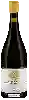
Winery Baron Saint LucL'Excellence de Saint Luc
 Red wine


This wine generally goes well with pork, poultry or veal.
Food and wine pairings with L'Excellence de Saint Luc
Pairings that work perfectly with L'Excellence de Saint Luc



Original food and wine pairings with L'Excellence de Saint Luc


The L'Excellence de Saint Luc of Winery Baron Saint Luc matches generally quite well with dishes of veal, pork or game (deer, venison) such as recipes of chicken supreme with morels, stuffed round zucchini or roast doe in the oven.
Details and technical informations about Winery Baron Saint Luc's L'Excellence de Saint Luc.
Discover the grape variety: Pinot noir
Pinot noir is an important red grape variety in Burgundy and Champagne, and its reputation is well known! Great wines such as the Domaine de la Romanée Conti elaborate their wines from this famous grape variety, and make it a great variety. When properly vinified, pinot noit produces red wines of great finesse, with a wide range of aromas depending on its advancement (fruit, undergrowth, leather). it is also the only red grape variety authorized in Alsace. Pinot Noir is not easily cultivated beyond our borders, although it has enjoyed some success in Oregon, the United States, Australia and New Zealand.
Informations about the Winery Baron Saint Luc
The Winery Baron Saint Luc is one of of the world's greatest estates. It offers 1 wines for sale in the of Rhone Valley to come and discover on site or to buy online.

The wine region of Rhone Valley
The Rhone Valley is a key wine-producing region in Southeastern France. It follows the North-south course of the Rhône for nearly 240 km, from Lyon to the Rhône delta (Bouches-du-Rhône), near the Mediterranean coast. The Length of the valley means that Rhône wines are the product of a wide variety of soil types and mesoclimates. The viticultural areas of the region cover such a distance that there is a widely accepted division between its northern and southern parts.
The word of the wine: Wine vinegar
Product of acetic fermentation of wine.