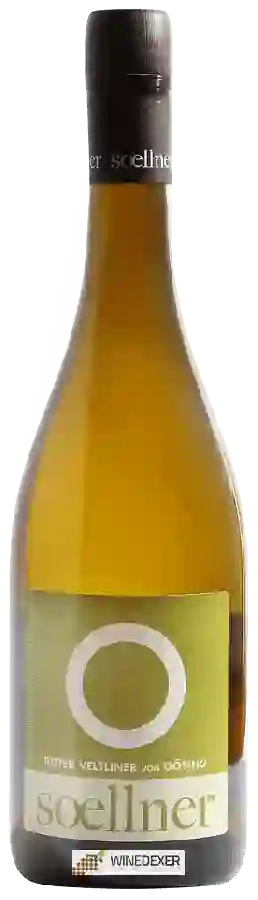
Winery SoellnerRoter Veltliner von Gösing
 White wine



This wine generally goes well with
The Roter Veltliner von Gösing of the Winery Soellner is in the top 60 of wines of Wagram.
Wine flavors and olphactive analysis





On the nose the Roter Veltliner von Gösing of Winery Soellner in the region of Weinland often reveals types of flavors of non oak, earth or microbio and sometimes also flavors of vegetal, oak or tree fruit.
Details and technical informations about Winery Soellner's Roter Veltliner von Gösing.
Discover the grape variety: Caino blanco
Natural intraspecific crossing probably between the albarino and the sousão - synonyms black amaral, caino bravo, ... -. It should not be confused with the fernao pires as they both have the same synonym alvarinhao. It can be found in the northwest of Spain and in Portugal, more precisely in the Vinhos Verdes region, ... in France it is totally unknown.
Last vintages of this wine
The best vintages of Roter Veltliner von Gösing from Winery Soellner are 2017, 2015, 2019, 2018 and 0.
Informations about the Winery Soellner
The Winery Soellner is one of of the world's greatest estates. It offers 19 wines for sale in the of Wagram to come and discover on site or to buy online.

The wine region of Wagram
The wine region of Wagram is located in the region of Niederösterreich of Weinland of Austria. We currently count 93 estates and châteaux in the of Wagram, producing 680 different wines in conventional, organic and biodynamic agriculture. The wines of Wagram go well with generally quite well with dishes .
The wine region of Weinland
Weinviertel DAC – whose name translates as "wine quarter" – is an appellation in Niederösterreich (Lower Austria). It is by far the largest Districtus Austriae Controllatus wine region in Austria. It was also the first Austrian wine region to be given that title, in 2002, with a DAC Reserve designation added in 2009. The designation applies only to white wines from the Grüner Veltliner Grape variety.
The word of the wine: Removal of shoes
In the spring, this operation consists of removing the mound of earth formed at the foot of the vines by ploughing between the rows in the autumn.