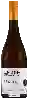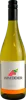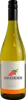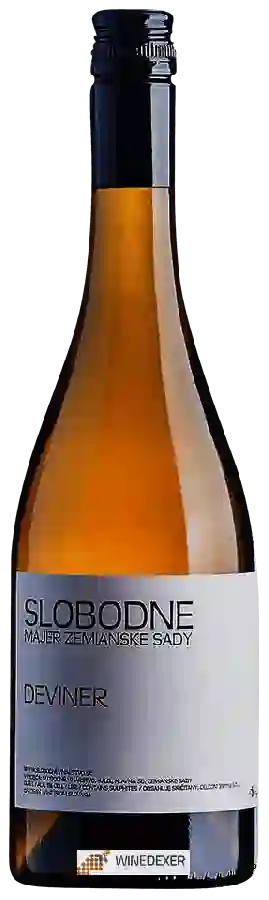
Winery Slobodné VinárstvoDeviner
 White wine


This wine generally goes well with
The Deviner of the Winery Slobodné Vinárstvo is in the top 20 of wines of Slovak Republic and in the top 20 of wines of Slovakia.
Wine flavors and olphactive analysis






On the nose the Deviner of Winery Slobodné Vinárstvo in the region of Slovakia often reveals types of flavors of pineapple, apricot or stone and sometimes also flavors of orange, hay or honey.
Details and technical informations about Winery Slobodné Vinárstvo's Deviner.
Discover the grape variety: Schioppettino
A very old grape variety that most likely originated in the Friuli Valley in northeastern Italy. Almost unknown in France, it can be found in Slovenia, in the United States (California, etc.), etc. It is not related to ribolla gialla.
Last vintages of this wine

The best vintages of Deviner from Winery Slobodné Vinárstvo are 2013, 2017, 2014, 2015
Informations about the Winery Slobodné Vinárstvo
The Winery Slobodné Vinárstvo is one of of the world's greatest estates. It offers 30 wines for sale in the of Slovakia to come and discover on site or to buy online.

The wine region of Slovakia
Slovakia (officially The Slovak Republic) is a landlocked country described as being either at the eastern edge of Western Europe, or the western edge of Eastern Europe. This dichotomy reflects the state's recent history, a story of political unrest common in this region. The lands that are now Slovakia were an integral Part of Hungary for almost 900 years, but became independent when the Austro-Hungarian Empire was dismantled after the First World War. Almost immediately, Slovakia aligned itself with Bohemia and Moravia (the modern-day Czech Republic), Silesia and Carpathian Ruthenia to form Czechoslovakia.
The word of the wine: Great wine
In the Bordeaux vineyards, the grand vin is the main wine of the château, although a "second wine" is usually produced. It is a wine of lesser ageing made from the youngest vines.