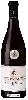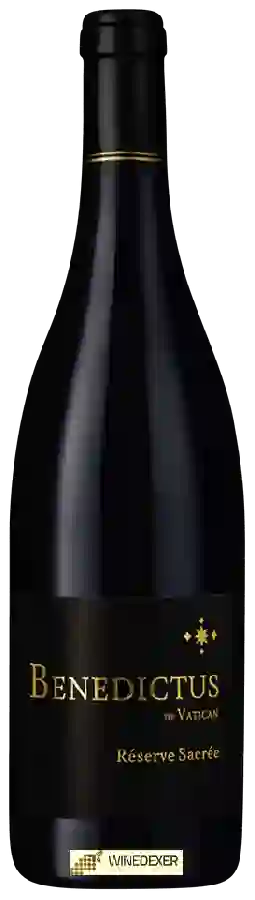
Château SixtineBenedictus de Vatican
 Red wine


This wine generally goes well with

Wine flavors and olphactive analysis




On the nose the Benedictus de Vatican of Château Sixtine in the region of Pays d'Oc often reveals types of flavors of cherry, oaky or smoke and sometimes also flavors of earthy, blackberry or blueberry.
Details and technical informations about Château Sixtine's Benedictus de Vatican.
Discover the grape variety: Prc
Simple, fresh dry whites with a pale golden colour, a supple palate and preserved acidity showing understated aromas of citrus, white flowers and herbaceous Dalmatian notes. An airy, rustic profile for early drinking. Preserved for its heritage value, it reflects the rich varietal diversity of the Croatian coast among the studied Dalmatian autochthonous varieties.
Last vintages of this wine

The best vintages of Benedictus de Vatican from Château Sixtine are 2019, 2018, 2017, 2015
Informations about the Château Sixtine
The Château Sixtine is one of of the world's greatest estates. It offers 18 wines for sale in the of Vin de Pays to come and discover on site or to buy online.

The wine region of Vin de Pays
Intermediate category between AOC and Vin de France (renamed IGP in 2009), 27% of national volume. Accessible, expressive wines defined by their grape: opulent Chardonnay, lively Sauvignon, round Merlot, peppery Syrah, floral Viognier with apricot. 76 IGP in France at 3 scales: regional (Pays d'Oc, Méditerranée, Val de Loire), departmental or local. Flexible rules, wide range of permitted grapes, free grape and vintage labelling.
The wine region of Pays d'Oc
The single-grape IGP par excellence: modern, accessible, frank and fruity wines, the popular signature of the Midi. Spicy Syrah reds (pepper, blackberry), round Merlot, structured Cabernet, generous Grenache, supple Cinsault. Crisp, tangy rosés. Opulent Chardonnay whites, lively Sauvignon, floral, apricoty Viognier.
The word of the wine: Draft liquor
Liqueur composed of sugar dissolved in wine, used for the dosage of sparkling wines made by the traditional method. It is also known as "liqueur d'expédition" or "liqueur de dosage".