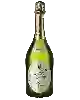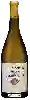
Winery Sieur d'ArquesLes Hauts Clochers Limoux Blanc
 White wine


In the mouth this white wine is a .
This wine generally goes well with vegetarian, poultry or lean fish.
Taste structure of the Les Hauts Clochers Limoux Blanc from the Winery Sieur d'Arques
Light | Bold | |
Dry | Sweet | |
Soft | Acidic |
In the mouth the Les Hauts Clochers Limoux Blanc of Winery Sieur d'Arques in the region of Languedoc-Roussillon is a .
Food and wine pairings with Les Hauts Clochers Limoux Blanc
Pairings that work perfectly with Les Hauts Clochers Limoux Blanc



Original food and wine pairings with Les Hauts Clochers Limoux Blanc


The Les Hauts Clochers Limoux Blanc of Winery Sieur d'Arques matches generally quite well with dishes of vegetarian, poultry or pasta such as recipes of mushroom, bacon and gruyere quiche, pastilla with chicken (moroccan pie with brick sheets) or basque lasagne.
Details and technical informations about Winery Sieur d'Arques's Les Hauts Clochers Limoux Blanc.
Discover the grape variety: Chardonnay
The white Chardonnay is a grape variety that originated in France (Burgundy). It produces a variety of grape specially used for wine making. It is rare to find this grape to eat on our tables. This variety of grape is characterized by small bunches, and small grapes. White Chardonnay can be found in many vineyards: South West, Burgundy, Jura, Languedoc & Roussillon, Cognac, Bordeaux, Beaujolais, Savoie & Bugey, Loire Valley, Champagne, Rhone Valley, Armagnac, Lorraine, Alsace, Provence & Corsica.
Last vintages of this wine
The best vintages of Les Hauts Clochers Limoux Blanc from Winery Sieur d'Arques are 0
Informations about the Winery Sieur d'Arques
The Winery Sieur d'Arques is one of of the world's great estates. It offers 235 wines for sale in the of Limoux to come and discover on site or to buy online.

The wine region of Limoux
Limoux is a relatively New appellation (created in 2003) in the eastern Part of the Aude region of Southern France, which applies to both red and white wines. The vineyards extend around the town that gave it its name, in the foothills of the Pyrenees east of the Languedoc-Roussillon/corbieres">Corbières and south of Carcassonne. Historically, this region is best known for its Sparkling wines, which are produced and sold under the appellations of Blanquette de Limoux and Crémant de Limoux. The vineyards here are higher and cooler than those of any other appellation in the Languedoc-Roussillon, and also further away from the moderating temperature influences of the Mediterranean.
The wine region of Languedoc-Roussillon
Languedoc (formerly Coteaux du Languedoc) is a key appellation used in the Languedoc-Roussillon wine region of southern France. It covers Dry table wines of all three colors (red, white and rosé) from the entire region, but leaves Sweet and Sparkling wines to other more specialized appellations. About 75% of all Languedoc wines are red, with the remaining 25% split roughly down the middle between whites and rosés. The appellation covers most of the Languedoc region and almost a third of all the vineyards in France.
The word of the wine: Performance
Quantity of grapes harvested per hectare. In AOC, the average yield is limited on the proposal of the appellation syndicate, validated by the Inao. The use of high-performance plant material (especially clones) and better control of vine diseases have increased yields. This is not without consequences on the quality of the wines (dilution) and on the state of the market (too much wine). We must not over-simplify: low yields are not synonymous with quality, and it is often in years with generous harvests that we find the greatest vintages (1982 and 1986 in Bordeaux, 1996 in Champagne, 1990 and 2005 in Burgundy...).