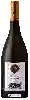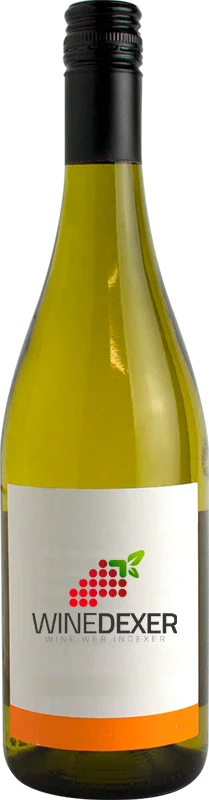
Winery Siete SolesReserva Sauvignon Blanc
 White wine
In the mouth this white wine is a with a nice freshness.
This wine generally goes well with vegetarian, shellfish or goat cheese.
Taste structure of the Reserva Sauvignon Blanc from the Winery Siete Soles
Light | Bold | |
Dry | Sweet | |
Soft | Acidic |
In the mouth the Reserva Sauvignon Blanc of Winery Siete Soles in the region of Central Valley is a with a nice freshness.
Food and wine pairings with Reserva Sauvignon Blanc
Pairings that work perfectly with Reserva Sauvignon Blanc



Original food and wine pairings with Reserva Sauvignon Blanc
The Reserva Sauvignon Blanc of Winery Siete Soles matches generally quite well with dishes of shellfish, vegetarian or goat cheese such as recipes of fideuà (paella with pasta and fish), cream and tuna quiche or green pizza.
Details and technical informations about Winery Siete Soles's Reserva Sauvignon Blanc.
Discover the grape variety: Humagne rouge
It is a variety of Valle d'Aosta origin and, like Arvine, it is also found in Italy. In the past, it was cultivated in Savoy and registered in the official catalogue of wine grape varieties, list B, under the name of red humagne, but it is not related to white humagne. According to recent genetic analyses, the Swiss variety Cornalin du Valais is its father and Rèze its grandmother. It is also the grandson of the petit rouge d' Aoste.
Informations about the Winery Siete Soles
The Winery Siete Soles is one of of the world's greatest estates. It offers 10 wines for sale in the of Central Valley to come and discover on site or to buy online.

The wine region of Central Valley
The Central Valley (El Valle Central) of Chile is one of the most important wine-producing areas in South America in terms of Volume. It is also one of the largest wine regions, stretching from the Maipo Valley (just south of Santiago) to the southern end of the Maule Valley. This is a distance of almost 250 miles (400km) and covers a number of Climate types. The Central Valley wine region is easily (and often) confused with the geological Central Valley, which runs north–south for more than 620 miles (1000km) between the Pacific Coastal Ranges and the lower Andes.
The word of the wine: Density per hectare
Number of vines per hectare. For the same yield, a vine planted with 3,000 vines per hectare bears many more bunches (per vine) than a vine planted with 10,000. The grapes will therefore be less rich in sugar and polyphenols (tannins, aromas...).