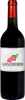
Winery SiegristPrimus Schelmenstück
 Red wine


This wine generally goes well with pork, poultry or veal.
Food and wine pairings with Primus Schelmenstück
Pairings that work perfectly with Primus Schelmenstück



Original food and wine pairings with Primus Schelmenstück


The Primus Schelmenstück of Winery Siegrist matches generally quite well with dishes of veal, pork or game (deer, venison) such as recipes of veal chop with rosemary, rabbit in sauce or rabbit with cider and apples.
Details and technical informations about Winery Siegrist's Primus Schelmenstück.
Discover the grape variety: Pinot noir
Pinot noir is an important red grape variety in Burgundy and Champagne, and its reputation is well known! Great wines such as the Domaine de la Romanée Conti elaborate their wines from this famous grape variety, and make it a great variety. When properly vinified, pinot noit produces red wines of great finesse, with a wide range of aromas depending on its advancement (fruit, undergrowth, leather). it is also the only red grape variety authorized in Alsace. Pinot Noir is not easily cultivated beyond our borders, although it has enjoyed some success in Oregon, the United States, Australia and New Zealand.
Last vintages of this wine
The best vintages of Primus Schelmenstück from Winery Siegrist are 2013, 0, 2015
Informations about the Winery Siegrist
The Winery Siegrist is one of of the world's great estates. It offers 59 wines for sale in the of Pfalz to come and discover on site or to buy online.

The wine region of Pfalz
Pfalz is a key wine producing region in western Germany, located between the Rhein/Rhine river and the low-lying Haardt mountain range (a natural continuation of the Alsatian Vosges). It covers a rectangle of land 45 miles (75km) Long and 15 miles (25km) wide. To the NorthLiesRheinhessen; to the South, the French border and Alsace. In terms of both quality and quantity, Pfalz is one of Germany's most important regions, and one which shows great promise for the future.
The word of the wine: Oxidative (breeding)
A method of ageing which aims to give the wine certain aromas of evolution (dried fruit, bitter orange, coffee, rancio, etc.) by exposing it to the air; it is then matured either in barrels, demi-muids or unoaked casks, sometimes stored in the open air, or in barrels exposed to the sun and to temperature variations. This type of maturation characterizes certain natural sweet wines, ports and other liqueur wines.