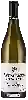
Shelter WineryChardonnay
 White wine


In the mouth this white wine is a with a nice freshness.
This wine generally goes well with pork, vegetarian or poultry.

Taste structure of the Chardonnay from the Shelter Winery
Light | Bold | |
Dry | Sweet | |
Soft | Acidic |
In the mouth the Chardonnay of Shelter Winery in the region of Baden is a with a nice freshness.
Food and wine pairings with Chardonnay
Pairings that work perfectly with Chardonnay



Original food and wine pairings with Chardonnay

The Chardonnay of Shelter Winery matches generally quite well with dishes of pork, rich fish (salmon, tuna etc) or vegetarian such as recipes of croziflette, red tuna steak provençal style or goat cheese and bacon quiche.
Details and technical informations about Shelter Winery's Chardonnay.
Discover the grape variety: Chardonnay
Whites with many faces: mineral and taut at Chablis (lemon, green apple, flint), opulent and buttery at Meursault and Puligny-Montrachet (hazelnut, brioche, yellow fruits), tense and chalky in Champagne (Blanc de Blancs). Also vinified sparkling and widely exported (Sonoma, Margaret River, Casablanca). A Burgundian variety, a cross of Pinot Noir × Gouais Blanc, half-sibling of Aligoté.
Last vintages of this wine
The best vintages of Chardonnay from Shelter Winery are 2016, 2014, 2015, 0
Informations about the Shelter Winery
The Shelter Winery is one of of the world's greatest estates. It offers 11 wines for sale in the of Baden to come and discover on site or to buy online.

The wine region of Baden
German capital of Pinot Noir (Spätburgunder): silky, fine reds with notes of red fruits, cherry, undergrowth and sweet spices, melted tannins. Round Grauburgunder (Pinot Gris), lively Weissburgunder, supple Müller-Thurgau, mineral Riesling. Germany's 3rd region (15,000 ha) in Baden-Württemberg facing Alsace, one of the country's warmest climates, volcanic soils at the Kaiserstuhl. Cradle of modern great German reds, elegant and fine.
The word of the wine: Aromatic
Character of a wine that is particularly expressive and rich in aromas. Some grape varieties, such as Gewurztraminer or Muscat, produce very aromatic wines.