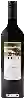
Domaine Serres MazardCuvée Origine Corbières
 Red wine



In the mouth this red wine is a powerful with a nice balance between acidity and tannins.
This wine generally goes well with beef, veal or pasta.
Taste structure of the Cuvée Origine Corbières from the Domaine Serres Mazard
Light | Bold | |
Smooth | Tannic | |
Dry | Sweet | |
Soft | Acidic |
In the mouth the Cuvée Origine Corbières of Domaine Serres Mazard in the region of Languedoc-Roussillon is a powerful with a nice balance between acidity and tannins.
Food and wine pairings with Cuvée Origine Corbières
Pairings that work perfectly with Cuvée Origine Corbières



Original food and wine pairings with Cuvée Origine Corbières
The Cuvée Origine Corbières of Domaine Serres Mazard matches generally quite well with dishes of beef, pasta or veal such as recipes of braciola (southern italy), cannelloni au gratin stuffed with bolognese sauce or alsatian fondue.
Details and technical informations about Domaine Serres Mazard's Cuvée Origine Corbières.
Discover the grape variety: Xinomavro
A very old grape variety grown in Greece and very well known in Central Macedonia. It is most certainly a descendant of white gouais and should not be confused with mavrud or mavroudi. It should be noted that many grape varieties have the synonym mavro. Xinomavro is registered in the Official Catalogue of wine grape varieties, list A1.
Last vintages of this wine
The best vintages of Cuvée Origine Corbières from Domaine Serres Mazard are 2012, 2011
Informations about the Domaine Serres Mazard
The Domaine Serres Mazard is one of of the world's greatest estates. It offers 21 wines for sale in the of Corbières to come and discover on site or to buy online.

The wine region of Corbières
Corbières is an important appellation in the Languedoc-roussillon">Languedoc-Roussillon region of southern France. It is one of the best known and most productive appellations in the Languedoc. The Corbières vineyards produce large quantities of red and rosé wines, as well as a growing number of white wines. The reds are the strongest Part of the appellation; they are reputedly Rich and herbal, made from Grenache, Syrah, Mourvèdre, Lledoner Pelut and Carignan.
The wine region of Languedoc-Roussillon
Languedoc (formerly Coteaux du Languedoc) is a key appellation used in the Languedoc-Roussillon wine region of southern France. It covers Dry table wines of all three colors (red, white and rosé) from the entire region, but leaves Sweet and Sparkling wines to other more specialized appellations. About 75% of all Languedoc wines are red, with the remaining 25% split roughly down the middle between whites and rosés. The appellation covers most of the Languedoc region and almost a third of all the vineyards in France.
The word of the wine: Performance
Quantity of grapes harvested per hectare. In AOC, the average yield is limited on the proposal of the appellation syndicate, validated by the Inao. The use of high-performance plant material (especially clones) and better control of vine diseases have increased yields. This is not without consequences on the quality of the wines (dilution) and on the state of the market (too much wine). We must not over-simplify: low yields are not synonymous with quality, and it is often in years with generous harvests that we find the greatest vintages (1982 and 1986 in Bordeaux, 1996 in Champagne, 1990 and 2005 in Burgundy...).