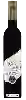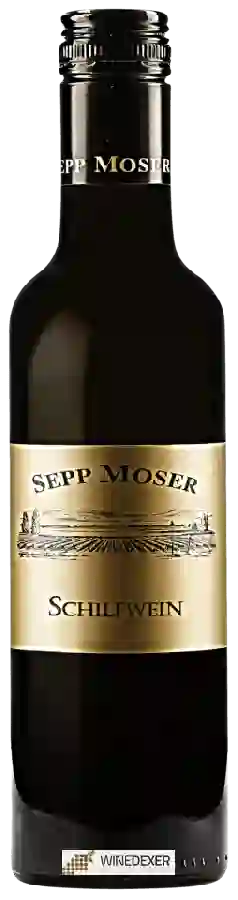
Winery Sepp MoserSchilfwein Scheurebe
 Sweet wine


This wine generally goes well with
Wine flavors and olphactive analysis



On the nose the Schilfwein Scheurebe of Winery Sepp Moser in the region of Weinland often reveals types of flavors of earth, tree fruit or citrus fruit.
Discover the grape variety: Scheurebe
German grape variety obtained in 1916 by Georg Shere (1879/1949). It was given until then as coming from a cross between Riesling and Sylvaner, but genetic tests have shown that its father is the Bouquettraube (Bukettrebe), and it is closely related to the Kerner. The Scheurebe can be found in Austria, Germany, Belgium, Switzerland, the Netherlands, Italy, Slovenia, Great Britain, the United States (California, Virginia, ...), Canada (Ontario, British Columbia, ...), ... practically unknown in France.
Last vintages of this wine
The best vintages of Schilfwein Scheurebe from Winery Sepp Moser are 2015, 0
Informations about the Winery Sepp Moser
The Winery Sepp Moser is one of of the world's greatest estates. It offers 42 wines for sale in the of Kremstal to come and discover on site or to buy online.

The wine region of Kremstal
The wine region of Kremstal is located in the region of Niederösterreich of Weinland of Austria. We currently count 108 estates and châteaux in the of Kremstal, producing 798 different wines in conventional, organic and biodynamic agriculture. The wines of Kremstal go well with generally quite well with dishes .
The wine region of Weinland
Weinviertel DAC – whose name translates as "wine quarter" – is an appellation in Niederösterreich (Lower Austria). It is by far the largest Districtus Austriae Controllatus wine region in Austria. It was also the first Austrian wine region to be given that title, in 2002, with a DAC Reserve designation added in 2009. The designation applies only to white wines from the Grüner Veltliner Grape variety.
The word of the wine: Hautain (en)
Pruning of the vine in height.