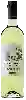
Winery Johann MüllnerLöss Veltliner
 White wine



This wine generally goes well with pork, vegetarian or lean fish.
Food and wine pairings with Löss Veltliner
Pairings that work perfectly with Löss Veltliner



Original food and wine pairings with Löss Veltliner



The Löss Veltliner of Winery Johann Müllner matches generally quite well with dishes of pork, rich fish (salmon, tuna etc) or shellfish such as recipes of pasta "carbonara" à la française, fish balls or mussels with bleu de bresse.
Details and technical informations about Winery Johann Müllner's Löss Veltliner.
Discover the grape variety: Christmas rose
Obtained in 1980 in the United States (California) by Harold P. Olmo and Albert T. Koyama by crossing S44-35c with 9117D. - Synonymy: no synonyms known to date (all the synonyms of the grape varieties, click here!).
Last vintages of this wine
The best vintages of Löss Veltliner from Winery Johann Müllner are 2018, 2017, 2015, 0 and 2013.
Informations about the Winery Johann Müllner
The Winery Johann Müllner is one of of the world's greatest estates. It offers 10 wines for sale in the of Kremstal to come and discover on site or to buy online.

The wine region of Kremstal
The wine region of Kremstal is located in the region of Niederösterreich of Weinland of Austria. We currently count 108 estates and châteaux in the of Kremstal, producing 798 different wines in conventional, organic and biodynamic agriculture. The wines of Kremstal go well with generally quite well with dishes .
The wine region of Weinland
Weinviertel DAC – whose name translates as "wine quarter" – is an appellation in Niederösterreich (Lower Austria). It is by far the largest Districtus Austriae Controllatus wine region in Austria. It was also the first Austrian wine region to be given that title, in 2002, with a DAC Reserve designation added in 2009. The designation applies only to white wines from the Grüner Veltliner Grape variety.
The word of the wine: Terroir
Strictly speaking, the notion of terroir corresponds to the geological characteristics of a vineyard. However, when we talk about terroir, we take into account the soil, the climate (even the microclimate), the flora, the fauna, and the human factor that characterizes the practices that make up the art of the craft.