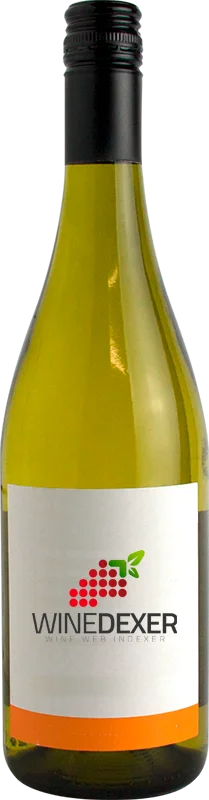
Winery SeebrichGrauburgunder Trocken
 White wine
In the mouth this white wine is a .
This wine generally goes well with pork, cured meat or mushrooms.
Taste structure of the Grauburgunder Trocken from the Winery Seebrich
Light | Bold | |
Dry | Sweet | |
Soft | Acidic |
In the mouth the Grauburgunder Trocken of Winery Seebrich in the region of Rheinhessen is a .
Food and wine pairings with Grauburgunder Trocken
Pairings that work perfectly with Grauburgunder Trocken


Original food and wine pairings with Grauburgunder Trocken

The Grauburgunder Trocken of Winery Seebrich matches generally quite well with dishes of pork, spicy food or mushrooms such as recipes of pulled pork (us pulled pork ), simple chicken curry or light stuffed tomatoes.
Details and technical informations about Winery Seebrich's Grauburgunder Trocken.
Discover the grape variety: Fleurtai
Interspecific cross between Sauvignonasse and Kozma 20-3 obtained in 2002 at the University and Institute of Applied Genetics of Udine (Italy), which is also the case for Soreli.
Informations about the Winery Seebrich
The Winery Seebrich is one of of the world's great estates. It offers 36 wines for sale in the of Rheinhessen to come and discover on site or to buy online.

The wine region of Rheinhessen
Rheinhessen is Germany's largest region for producing the quality wines of the Qualitätswein bestimmter Anbaugebiete (QbA) and Prädikatswein designations, with roughly 26,500 hectares (65,000 acres) of Vineyard">Vineyards as of 2014. Many of its most significant viticultural areas are favorably influenced by the Rhine river, which runs aLong its North and eastern borders. The Rhine, along with the Nahe river to the west and the Haardt mountains to its South, form a natural border. Rheinhessen covers an area south of Rheingau, north of Pfalz and east of Nahe, and is located within the Rhineland-Palatinate federal state.
The word of the wine: Baco 22A
A white grape variety resulting from the hybridization of the folle blanche and the noah. It is the only hybrid to remain authorized in a French appellation vineyard, that of Armagnac, where it thrives in particular on the tawny sands of Bas-Armagnac. When distilled, its wine produces round, smooth and aromatic eaux-de-vie with hints of ripe fruit.