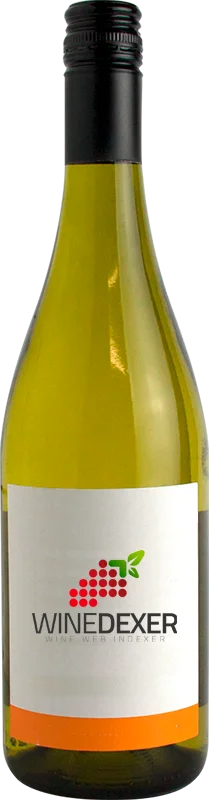
Winery SchriesheimSauvignon Blanc Spätlese
 White wine
In the mouth this white wine is a with a nice freshness.
This wine generally goes well with vegetarian, shellfish or goat cheese.
Taste structure of the Sauvignon Blanc Spätlese from the Winery Schriesheim
Light | Bold | |
Dry | Sweet | |
Soft | Acidic |
In the mouth the Sauvignon Blanc Spätlese of Winery Schriesheim in the region of Baden is a with a nice freshness.
Food and wine pairings with Sauvignon Blanc Spätlese
Pairings that work perfectly with Sauvignon Blanc Spätlese



Original food and wine pairings with Sauvignon Blanc Spätlese
The Sauvignon Blanc Spätlese of Winery Schriesheim matches generally quite well with dishes of shellfish, vegetarian or goat cheese such as recipes of scupion (small cuttlefish) in hot sauce, vegan leek and tofu quiche or tuna burgers.
Details and technical informations about Winery Schriesheim's Sauvignon Blanc Spätlese.
Discover the grape variety: Charmont
Intraspecific crossing between Chasselas and Chardonnay, obtained in 1965 by Jean-Louis Simon and selected by André Jacquinet at the Agroscope Changins-Wädenswil research station (Switzerland). This grape variety is known and cultivated in Switzerland, but it can also be found in Hungary, Germany, Italy, etc., and is virtually unknown in France. With the same parents, Jean-Louis Simon also obtained the doral.
Informations about the Winery Schriesheim
The Winery Schriesheim is one of of the world's great estates. It offers 44 wines for sale in the of Baden to come and discover on site or to buy online.

The wine region of Baden
Baden is the southernmost of Germany's 13 official wine regions. It is also the warmest. Its relatively sunny, DryClimate permits the production of good-quality Spätburgunder (Pinot Noir) and ripe, relatively Full-bodied">Full-bodied examples of Grauburgunder (Pinot Gris) and Weissburgunder (Pinot Blanc). These are often made in oaked styles.
The word of the wine: Aromatic
Character of a wine that is particularly expressive and rich in aromas. Some grape varieties, such as Gewurztraminer or Muscat, produce very aromatic wines.