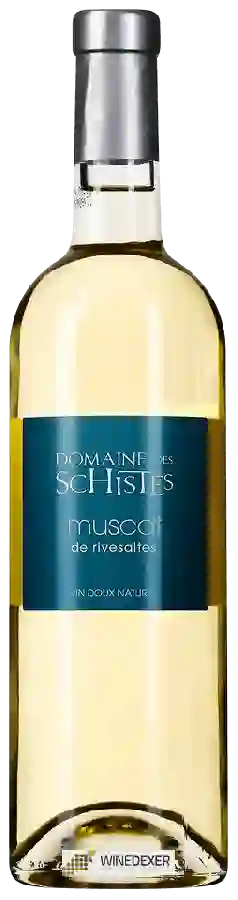
Domaine des SchistesMuscat de Rivesaltes
 Natural sweet wine


This wine generally goes well with spicy food and sweet desserts.

Wine flavors and olphactive analysis

Food and wine pairings with Muscat de Rivesaltes
Pairings that work perfectly with Muscat de Rivesaltes


Original food and wine pairings with Muscat de Rivesaltes
The Muscat de Rivesaltes of Domaine des Schistes matches generally quite well with dishes of spicy food or sweet desserts such as recipes of shrimp and zucchini with curry and coconut milk or rice with milk.
Details and technical informations about Domaine des Schistes's Muscat de Rivesaltes.
Discover the grape variety: Len de l’El
Lively, aromatic dry or medium-sweet whites with a pale golden colour, airy palate with fresh acidity, signature aromas of white flowers, citrus (lemon, grapefruit) and exotic fruits (pineapple, passion fruit). Also as honeyed medium-sweet and sweet wines. Star of the Gaillac AOC appellation in dry and medium-sweet white, it defines the Gaillac identity alongside Mauzac and Sauvignon. Indigenous French white variety from the South-West, grown at Gaillac (Tarn).
Last vintages of this wine

The best vintages of Muscat de Rivesaltes from Domaine des Schistes are 2017, 2013, 2014, 2015 and 2016.
Informations about the Domaine des Schistes
The Domaine des Schistes is one of of the world's greatest estates. It offers 24 wines for sale in the of Muscat de Rivesaltes to come and discover on site or to buy online.

The wine region of Muscat de Rivesaltes
Star AOC of Roussillon's Vins Doux Naturels: Muscat a Petits Grains and Muscat of Alexandria as signatures in equal parts in sweet whites — pale gold robe with green or pinkish glints, dazzling signature aromas of peach, lemon, mango, fresh grape, rose and mint, unctuous palate preserved by mutage with alcohol. Amber evolution with age toward honey, candied apricot and spices. AOC, ~4,400 ha across 99 communes, varied soils (granite, schist, limestone), Mediterranean and Muscat de Noel.
The wine region of Languedoc-Roussillon
Largest single French vineyard, dominated by sunny, generous reds. Spicy Syrah, candied Grenache (ripe fruit, garrigue), structured Carignan, deep Mourvèdre, supple Cinsault. Stars: structured Corbières, Minervois, Faugères, Saint-Chinian; round Côtes-du-Roussillon. Legendary vins doux naturels: Banyuls and Maury (fortified Grenache) with notes of cocoa, fig, prune.
The word of the wine: Away from the eye
See len de l'el.