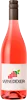
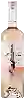
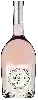
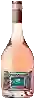
Winery Saint PauletLou Souquier Rosé
 Pink wine


In the mouth this pink wine is a with a nice freshness.
This wine generally goes well with vegetarian, appetizers and snacks or lean fish.
Taste structure of the Lou Souquier Rosé from the Winery Saint Paulet
Light | Bold | |
Dry | Sweet | |
Soft | Acidic |
In the mouth the Lou Souquier Rosé of Winery Saint Paulet in the region of Pays d'Oc is a with a nice freshness.
Food and wine pairings with Lou Souquier Rosé
Pairings that work perfectly with Lou Souquier Rosé



Original food and wine pairings with Lou Souquier Rosé


The Lou Souquier Rosé of Winery Saint Paulet matches generally quite well with dishes of pasta, vegetarian or appetizers and snacks such as recipes of pasta "carbonara" à la française, quiche without pastry or hummus.
Details and technical informations about Winery Saint Paulet's Lou Souquier Rosé.
Discover the grape variety: Ortega
An intraspecific cross between Müller-Thurgau and Siegerrebe obtained in 1948 by Hans Breider (1908-1960) at the Bavarian Research Station for Viticulture and Horticulture in Veitsnöchheim (Germany). Almost unknown in France, it can be found in Germany, Belgium, England, the United States and Canada. Its early maturity and muscatel taste have sometimes led to it being offered as a table grape on market stalls.
Informations about the Winery Saint Paulet
The Winery Saint Paulet is one of of the world's great estates. It offers 24 wines for sale in the of Pays d'Oc to come and discover on site or to buy online.

The wine region of Pays d'Oc
Pays d'Oc is the PGI for red, white and rosé wines that are produced over a wide area of the southern coast of France. The PGI catchment area corresponds roughly to the Languedoc-roussillon">Languedoc-Roussillon wine region, one of the largest wine regions in France. The area covers all wines that are not produced under the strict laws that govern AOC-level appellations in the regions: among them, Corbières, Minervois and the Languedoc appellation itself. The Pays d'Oc PGI is arguably the most important in France, producing the majority of the country's PGI wines.
The word of the wine: Full
A full, complete and harmonious wine, offering a great wealth of flavours.