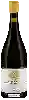
Winery Saint Michel Les VignesRed
 Red wine


This wine generally goes well with
Details and technical informations about Winery Saint Michel Les Vignes's Red.
Discover the grape variety: Muscat de Saint Vallier
Interspecific crossing obtained by Seyve-Villard between the 12 129 Seyve-Villard and the early panse of Provence. This direct-producing hybrid is practically no longer multiplied, and is nowadays only found in private gardens. - Synonymy: 20 473 Seyve-Villard (for all the synonyms of the varieties, click here!).
Last vintages of this wine
The best vintages of Red from Winery Saint Michel Les Vignes are 2015
Informations about the Winery Saint Michel Les Vignes
The Winery Saint Michel Les Vignes is one of of the world's greatest estates. It offers 5 wines for sale in the of Rhone Valley to come and discover on site or to buy online.

The wine region of Rhone Valley
The Rhone Valley is a key wine-producing region in Southeastern France. It follows the North-south course of the Rhône for nearly 240 km, from Lyon to the Rhône delta (Bouches-du-Rhône), near the Mediterranean coast. The Length of the valley means that Rhône wines are the product of a wide variety of soil types and mesoclimates. The viticultural areas of the region cover such a distance that there is a widely accepted division between its northern and southern parts.
The word of the wine: Velouté
Said of a wine that is soft and caressing in the mouth.