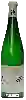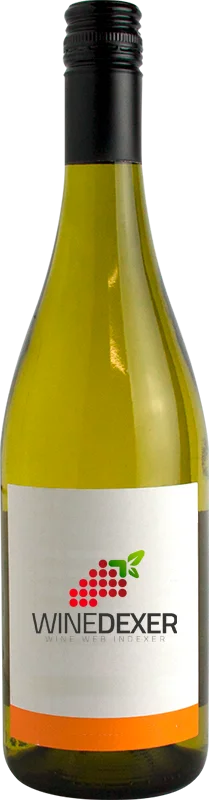
Winery RotheSilvaner
 White wine



In the mouth this white wine is a with a nice freshness.
This wine generally goes well with pork, vegetarian or poultry.
Taste structure of the Silvaner from the Winery Rothe
Light | Bold | |
Dry | Sweet | |
Soft | Acidic |
In the mouth the Silvaner of Winery Rothe in the region of Mosel is a with a nice freshness.
Food and wine pairings with Silvaner
Pairings that work perfectly with Silvaner



Original food and wine pairings with Silvaner


The Silvaner of Winery Rothe matches generally quite well with dishes of veal, pork or vegetarian such as recipes of potjevleesch (meat in a pot), turkey roulades, flavoured sauce or quiche with bacon and gruyère cheese.
Details and technical informations about Winery Rothe's Silvaner.
Discover the grape variety: Monerac
Monerac noir is a grape variety that originated in France (Languedoc). It produces a variety of grape specially used for wine making. It is rare to find this grape to eat on our tables. Monerac noir can be found in several vineyards: South-West, Cognac, Bordeaux, Provence & Corsica, Rhone valley, Languedoc & Roussillon, Loire valley, Savoie & Bugey, Beaujolais.
Last vintages of this wine
The best vintages of Silvaner from Winery Rothe are 0
Informations about the Winery Rothe
The Winery Rothe is one of of the world's greatest estates. It offers 24 wines for sale in the of Mosel to come and discover on site or to buy online.

The wine region of Mosel
Mosel is the most famous of Germany's 13 official wine regions, and also the third largest in terms of production. As with many German regions, it is most aasociated with a range of wine styles made from the Riesling grape variety, but Müller-Thurgau is also widely planted. The best Mosel Riesling wines are some of the finest whites in the world. Light and low in Alcohol, they can be intensely fragrant with beguiling Floral">floral and Mineral notes, and a wonderful Balance of sweetness and Acidity.
The word of the wine: Effervescent
Any wine loaded with CO2 (carbon dioxide), which is revealed in the form of bubbles, reinforcing the freshness effect in the mouth. This gas production is the result of what is called the second fermentation in the bottle. It occurs in champagnes and sparkling wines such as crémants.