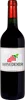
Winery Rossler SchneiderPfalz Blauer Spätlese Rotwein Trocken Spätburgunder
 Red wine
This wine generally goes well with vegetarian
Food and wine pairings with Pfalz Blauer Spätlese Rotwein Trocken Spätburgunder
Pairings that work perfectly with Pfalz Blauer Spätlese Rotwein Trocken Spätburgunder

Original food and wine pairings with Pfalz Blauer Spätlese Rotwein Trocken Spätburgunder
The Pfalz Blauer Spätlese Rotwein Trocken Spätburgunder of Winery Rossler Schneider matches generally quite well with dishes of vegetarian such as recipes of quiche without eggs.
Details and technical informations about Winery Rossler Schneider's Pfalz Blauer Spätlese Rotwein Trocken Spätburgunder.
Discover the grape variety: Negro Aramo
Its country of origin is Greece - it is related to the Greek xynomavro grape variety - and it has been cultivated for a long time in southern Italy, particularly in the southern region of Puglia, although it is known throughout the country. It should not be confused with aglianico, with which it has some synonyms. It should be noted that there is an early Negro Aramo clone. We can also meet the Negro Aramo in England, Australia, New Zealand, the United States (California, ...), ... in France it is almost unknown.
Informations about the Winery Rossler Schneider
The Winery Rossler Schneider is one of of the world's greatest estates. It offers 18 wines for sale in the of Pfalz to come and discover on site or to buy online.

The wine region of Pfalz
Pfalz is a key wine producing region in western Germany, located between the Rhein/Rhine river and the low-lying Haardt mountain range (a natural continuation of the Alsatian Vosges). It covers a rectangle of land 45 miles (75km) Long and 15 miles (25km) wide. To the NorthLiesRheinhessen; to the South, the French border and Alsace. In terms of both quality and quantity, Pfalz is one of Germany's most important regions, and one which shows great promise for the future.
The word of the wine: Second fermentation
In the making of champagne, fermentation of the base wine to which is added the liqueur de tirage and which takes place in the bottle. This second fermentation produces the carbon dioxide, and therefore the bubbles that make up the effervescence of the wine.